 +86-15052135118

 Español
 Get In Touch


Halfway through a service shift, a technician finds the M8 nuts on a vibrating conveyor drive backed off to finger-tight, even though they were torqued to spec the week before. That failure mode is exactly the problem a lock nut is built to solve. A lock nut is a nut engineered to keep its clamp load under vibration, torque fluctuation, and thermal cycling, where a plain nut would slowly unwind. This guide covers the working definition, the three locking principles, the types you can buy, and the trade-offs in temperature, reuse, and material that decide which one belongs on your drawing.
Content
- 1 What Is a Lock Nut? The Working Definition
- 2 How a Lock Nut Works: Three Ways the Lock Is Created
- 3 Lock Nut Types Compared: Nylon Insert, All-Metal, Serrated Flange, and Jam
- 4 Lock Nut or Standard Nut: Where the Upgrade Pays Off
- 5 Temperature, Reuse, and Material Choices That Change the Spec
- 6 How to Install a Lock Nut So It Stays Tight
- 7 Lock Nut Questions Buyers Actually Ask
What Is a Lock Nut? The Working Definition
A lock nut is an internally threaded fastener that adds a second, loosening-resistant mechanism on top of the ordinary friction between nut and bolt threads. That second mechanism is the whole point: a standard nut has one line of defense, and it disappears the moment clamp load disappears.
A plain hex nut stays tight only because the stretched bolt presses the engaged threads against each other. Junker-style vibration testing shows that sideways motion can bleed clamp load away until thread friction approaches zero, at which point the nut rotates freely. Lock nut designs assume this will happen sooner or later and prepare for it: either the nut keeps gripping the bolt thread with no load on the joint, or it grips the bearing surface or the nut beside it. Every catalog entry labeled lock nut, self-locking nut, or prevailing-torque nut falls into one of those two camps.
How a Lock Nut Works: Three Ways the Lock Is Created
Every commercial lock nut creates its lock in one of three ways: extra friction on the thread, mechanical interference between parts, or an auxiliary bonding material. Knowing which principle a type uses tells you how it behaves in heat, how often it can be reused, and what it costs.
- Prevailing torque friction. A nylon collar or a deliberately out-of-round metal thread squeezes the bolt thread, so the nut runs hard even with no load on it. This is why a lock nut feels stiff before it ever touches the washer.
- Mechanical interference. Serrations under a flange bite into the mating surface, or a thin jam nut wedges the main nut against the bolt so the thread flanks cannot slip.
- Auxiliary locking. A plain nut gains the lock from outside: thread-locking adhesive, a toothed washer, or a spring washer adds a chemical or spring element to the joint.
Lock Nut Types Compared: Nylon Insert, All-Metal, Serrated Flange, and Jam
Nylon insert and all-metal prevailing-torque nuts cover most general engineering work; serrated flange nuts win on assembly speed, and jam nuts win on cost. The table maps each type to the job it fits.
| Type | How it locks | Best suited to | Watch-outs |
| Nylon insert, DIN 985 | Nylon collar deforms around the bolt thread | General machinery, enclosures, medium indoor vibration | Collar softens near 120 C; limited reuse; check chemical exposure |
| All-metal prevailing torque, DIN 980 | Out-of-round or pitched metal threads grip the bolt | Hot zones: engines, pumps, compressors | Higher running torque; thread galling on dry stainless pairs |
| Serrated flange, DIN 6923 | Serrations bite the bearing surface under the nut | Sheet metal, painted frames, fast assembly lines | Marks the surface; needs a substrate hard enough to bite |
| Jam nut, DIN 439 | Thin nut wedged against a full nut locks both | Long studs, threaded rod, cost-driven builds | Two-part assembly; torque sequence matters |
| Bearing lock nut, KM series | Tab or prong washer keys the nut to the shaft | Bearing retention on machined shafts | Needs a matched lock washer and a machined slot |
Lock Nut or Standard Nut: Where the Upgrade Pays Off
Specify a lock nut whenever the joint sees vibration, thermal movement, or safety-critical load; keep the standard nut on static, regularly serviced joints. For a machine frame that gets opened every maintenance round, a plain hexagon nut to DIN 934, torqued correctly, is the cheaper and perfectly sound choice.
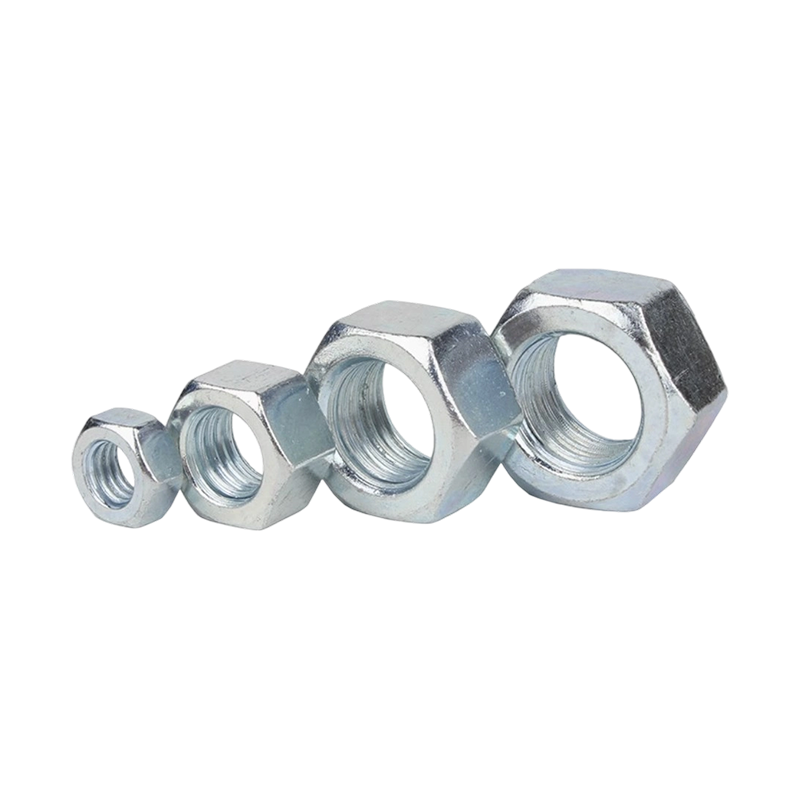 Hexagon Nut DIN 934 / GB 6170A standard hex nut for use with DIN 933 or DIN 931 bolts, widely applied in machinery, steel structures, and automotive assembly. On static, regularly serviced joints like machine frames, a correctly torqued plain nut is a sound, economical choice.View Product →
- The joint sits on vibrating or rotating equipment
- Loosening creates a safety or downtime risk
- Temperature swings between hot and cold
- Retorque checks are impractical after assembly
- Loads are static and direction rarely changes
- The joint is opened and inspected on a schedule
- Torque is controlled on a production line
- Budget dominates and the risk is genuinely low
There is also a middle path. On joints with only light vibration, a standard nut backed by a spring washer adds a spring element at very low cost, though it will not match a true prevailing-torque nut under heavy transverse movement.
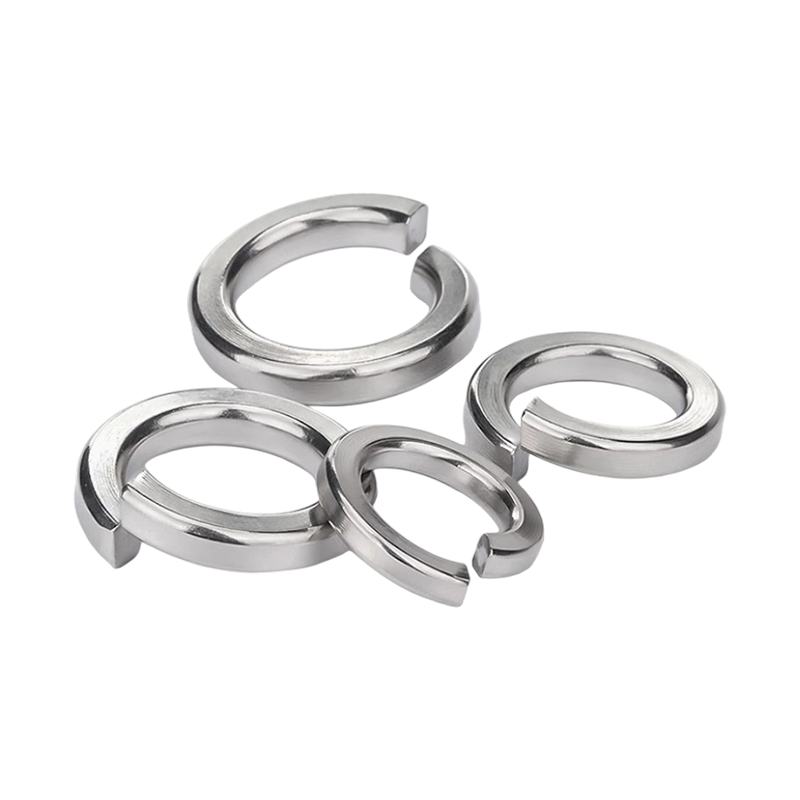 Spring Washers DIN 127DIN 127 spring lock washers add a spring element that helps prevent bolts and nuts loosening under vibration. On joints with only light vibration, pairing one with a standard nut offers low-cost anti-loosening, though it cannot match a true prevailing-torque lock nut.View Product →
Temperature, Reuse, and Material Choices That Change the Spec
Temperature ceiling, reuse count, and material or coating are the three details that most often change a lock nut specification after the first draft of a drawing. The nylon collar in a DIN 985 nut softens as it approaches 120 degrees Celsius, so hot zones call for all-metal designs whose steel threads keep working far higher. Reuse follows the same logic: the collar deforms permanently the first time it runs down the bolt, so most manufacturers rate nylon insert nuts for only a few assemblies, while all-metal types tolerate more cycles with removal torque checked against the data sheet.
Material choice mirrors the environment. Zinc-plated carbon steel covers most indoor machinery; washdown, coastal, and chemically exposed sites justify stainless. The cost-versus-corrosion logic is the same one that governs stainless, galvanized, and zinc-plated fastener selection, and it is worth settling before you standardize one nut across a whole machine.
How to Install a Lock Nut So It Stays Tight
Tools and torque wrenches are the same as for a standard nut; the difference is that the lock adds resistance you must account for, not fight. Four checkpoints keep the process honest.
- Check the thread by hand. The nut should spin freely until the lock engages, then resistance should rise smoothly. Grit or a crossed thread shows up here, not under the wrench.
- Bring the joint to seat. Run the nut until the bearing surface contacts the joint. Prevailing torque applies through the entire run, so never judge tightness by feel alone.
- Torque to the specification. Installation torque equals clamping torque plus prevailing torque. Use the data sheet value for the property class, and lubricate only if the data sheet allows it, because lubrication changes prevailing torque.
- Mark and recheck. Witness-mark the nut against the bolt, run the machine, and inspect after the first hours of operation. Replace rather than reuse a nylon nut backed off a failed joint.
Lock Nut Questions Buyers Actually Ask
Which way does a nylon insert lock nut go on?
Fit the nut with the nylon collar facing outward, away from the joint. The plain metal face then seats against the washer or surface, and the collar grips the exposed end of the bolt. The nut locks in either orientation, but collar-out protects the insert and preserves full thread engagement.
How many times can you reuse a nylon insert lock nut?
Treat it as a short-life part. The collar is engineered to deform, so prevailing torque drops a little with every cycle. Many manufacturers advise replacing the nut after each disassembly on critical joints and allowing only a handful of reuses elsewhere. All-metal prevailing-torque nuts accept more cycles, but removal torque should still be verified.
What is prevailing torque?
Prevailing torque is the torque needed to rotate a nut along the bolt thread when there is no axial load on the joint. It exists only in locking designs, it is the measurable expression of the lock, and standards such as ISO 2320 define how it is tested so that data sheets can list minimum values per size.
Which material should a lock nut be made from?
Match the joint rather than the brochure. Zinc-plated carbon steel suits most indoor machinery, stainless 304 suits washdown and coastal sites, and hardened stainless 410 suits high-torque joints where thread strength matters. The engineering comparison between carbon steel and stainless fasteners comes down to load, temperature, and corrosion exposure, and it applies to nuts just as it does to screws.