 +86-15052135118

 Español
 Get In Touch


In the vast world of fasteners, selecting the right screw material is critical for the longevity, safety, and performance of any assembly. Among the various options, SUS410 stainless steel screw stands out as a popular and versatile choice for numerous industrial and construction applications. As a professional manufacturer with decades of experience, Wuxi Sharp Metal Products Co., Ltd. understands the intricacies of material science and fastener engineering. This article delves deep into the specifics of SUS410 screws, offering a comprehensive guide to their properties, ideal uses, and how they compare to other materials, empowering you to make an informed decision for your next project.
Content
- 1 What is SUS410 Stainless Steel?
- 2 Advantages of Using SUS410 Stainless Steel Screws
- 3 Primary Applications and Industries
- 4 How SUS410 Compares to Other Common Screw Materials
- 5 Critical Considerations for Selection and Specification
- 6 Maintenance and Long-Term Performance
- 7 Frequently Asked Questions (FAQ)
- 8
- 9 References
What is SUS410 Stainless Steel?
SUS410 is a martensitic grade of stainless steel. The "SUS" prefix denotes the Japanese JIS standard, which is functionally equivalent to ASTM's 410 grade[2]. It is a straight chromium (11.5-13.5%) steel that can be hardened by heat treatment to achieve a good balance of strength and moderate corrosion resistance.
Key Material Composition and Properties
Chemical Composition
- Chromium (Cr): 11.5 - 13.5%. Provides the fundamental corrosion and oxidation resistance.
- Carbon (C): Up to 0.15%. Contributes to hardness and strength after heat treatment.
- Manganese (Mn), Silicon (Si), Phosphorus (P), Sulfur (S): Present in smaller amounts.
- Iron (Fe): Makes up the remainder of the alloy.
Mechanical and Physical Properties
- Hardness: Can be hardened to approximately 35-45 HRC after heat treatment.
- Tensile Strength: High tensile strength compared to austenitic grades like 304.
- Magnetism: It is magnetic, a key identifier for martensitic stainless steels.
- Corrosion Resistance: Offers good resistance to atmospheric conditions, water, and some mild chemicals, but is not suitable for highly corrosive environments like marine settings.
Advantages of Using SUS410 Stainless Steel Screws
Choosing SUS410 stainless steel screw offers a distinct set of benefits that make them suitable for demanding applications.
- High Strength and Hardness: Their ability to be heat-treated results in excellent shear and tensile strength, making them resistant to deformation under load.
- Good Wear Resistance: The hardened surface resists abrasion, which is crucial in moving parts or assemblies subject to vibration.
- Moderate Corrosion Resistance: Sufficient for many indoor, dry, and mildly humid environments, protecting against rust better than carbon steel.
- Cost-Effectiveness: Generally more affordable than higher-nickel stainless steels like 304 or 316, providing a good performance-to-cost ratio.
- Temperature Tolerance: Maintains mechanical properties at elevated temperatures better than many carbon steels.
Primary Applications and Industries
The unique property profile of SUS410 screws dictates their ideal use cases. Common applications include:
- Automotive Components: Used in non-critical engine parts, trim, and brackets where strength and some corrosion resistance are needed.
- General Machinery and Equipment: Fasteners for pumps, valves, and agricultural machinery.
- Construction and Structural Fastening: Ideal for structural fastening with SUS410 screws in dry or interior environments, such as in framing or securing non-load-bearing architectural elements.
- Appliance Manufacturing: Found in the internal assemblies of washing machines, dryers, and other household appliances.
At Wuxi Sharp Metal Products Co., Ltd., our large-scale production and inventory capabilities ensure a steady supply of high-quality SUS410 screws for these diverse industries, supported by our stringent quality assurance system.
How SUS410 Compares to Other Common Screw Materials
Selecting the optimal screw often involves comparing material options. Below is a detailed comparison of SUS410 with other prevalent fastener materials.
When comparing material options, it is essential to understand their relative strengths and weaknesses. SUS410 vs 304 stainless steel screws represents a classic choice between high strength and superior corrosion resistance. While SUS410 offers greater hardness and tensile strength, AISI 304 stainless steel provides excellent corrosion resistance in a wider range of environments due to its nickel content but is generally softer and more ductile.
| Property/Feature | SUS410 Stainless Steel | AISI 304 Stainless Steel | Carbon Steel (Grade 8.8) | AISI 316 Stainless Steel |
|---|---|---|---|---|
| Corrosion Resistance | Moderate (good for atmospheric exposure) | Excellent (good for many chemical & outdoor uses) | Poor (requires plating/coating) | Superior (excellent for marine/chemical environments) |
| Strength & Hardness | High (can be heat-treated) | Moderate (softer, more ductile) | Very High | Moderate (similar to 304) |
| Magnetism | Magnetic | Typically Non-magnetic | Magnetic | Typically Non-magnetic |
| Cost | Mid-Range | Higher than SUS410 | Lowest | Highest |
| Best For | High-strength needs with moderate corrosion risk | General corrosion resistance where strength is secondary | High-strength indoor/dry applications with coating | Harsh corrosive environments (saltwater, chemicals) |
Critical Considerations for Selection and Specification
Specifying the correct SUS410 stainless steel screw involves more than just material choice. Here are key factors to ensure optimal performance.
1. Understanding Strength Grades and Heat Treatment
The performance of a SUS410 screw is heavily influenced by its heat treatment state. Heat treatment for SUS410 screw hardness is a controlled process of heating and cooling to achieve desired mechanical properties. Annealed screws are softer and easier to machine, while hardened and tempered screws offer high strength for demanding applications.
- Annealed Condition: Softer, easier to cut or form.
Hardened & Tempered Condition:
- Maximizes tensile strength and wear resistance, suitable for most fastener applications.
2. Corrosion Resistance in Specific Environments
It is vital to match the screw's corrosion resistance to its operating environment. For instance, while suitable for general use, corrosion resistance of SUS410 screws is not sufficient for prolonged exposure to chlorides (e.g., de-icing salts or seawater). In such cases, a more corrosion-resistant grade like 316 would be necessary.
- Safe Environments: Dry indoor settings, low-humidity areas, certain automotive under-hood locations.
- Requires Caution/Not Recommended: Coastal areas, swimming pool structures, chemical processing plants, outdoor applications with direct salt spray.
3. Machining and Installation Best Practices
SUS410 can be machined, but it requires appropriate techniques, especially in its hardened state. Using the correct machining tips for SUS410 fasteners can prevent tool wear and ensure a clean finish. Furthermore, proper installation is crucial to avoid premature failure.
- Use sharp, high-speed steel or carbide tools.
- Employ slow speeds and steady feeds.
- Use lubricants or cutting fluids to reduce heat and friction.
- During installation, avoid over-torquing, which can lead to thread stripping or head shearing, especially in smaller diameters.
4. Sourcing for Door and Window Systems
A specialized and common application is in building fixtures. Since the year 2000, Wuxi Sharp Metal Products Co., Ltd. has been supplying components for door and window systems. For SUS410 screws for door window assembly, the combination of strength, moderate corrosion resistance, and cost-effectiveness makes them a reliable choice for securing hinges, locks, and frames in both engineering and home decoration contexts, particularly where heavy loads or security are concerns.
Maintenance and Long-Term Performance
To maximize the service life of SUS410 screws, proper maintenance is essential.
- Regular Inspection: Periodically check for signs of surface rust or corrosion, especially in joints exposed to moisture.
- Cleaning: Clean with a mild detergent and water to remove contaminants. Avoid harsh chlorinated cleaners.
- Re-torquing: In vibrating assemblies, checking torque after initial service can prevent loosening.
- Replacement: If significant corrosion or mechanical damage is found, replace the screw promptly to maintain assembly integrity.
Frequently Asked Questions (FAQ)
1. Are SUS410 stainless steel screws rust-proof?
No, they are not rust-*proof*. They are rust-*resistant*. SUS410 stainless steel screw offers good resistance to atmospheric corrosion but can rust under prolonged exposure to moisture, salt, or strong chemicals. Their performance is superior to carbon steel but inferior to grades like 304 or 316 in harsh environments.
2. Can SUS410 screws be used outdoors?
They can be used outdoors in mild, low-humidity, and non-coastal environments. For outdoor applications with high humidity, acid rain, or exposure to de-icing salts, a more corrosion-resistant stainless steel like AISI 304 or 316 is strongly recommended.
3. How can I tell if a screw is made from SUS410?
Visually, it's difficult. However, SUS410 is magnetic. If a stainless steel screw is strongly magnetic, it is likely a martensitic or ferritic grade like 410. Austenitic grades (304, 316) are generally non-magnetic. For absolute certainty, material certification from the manufacturer, such as the documentation provided by Wuxi Sharp Metal Products Co., Ltd., is required.
4. What is the maximum temperature SUS410 screws can withstand?
SUS410 screws can maintain their mechanical properties at continuous operating temperatures up to approximately 650°C (1200°F) [1]. However, their oxidation resistance decreases significantly above 700°C (1290°F). For high-temperature applications, specialized alloys are often better suited.
5. Why choose SUS410 over carbon steel screws?
Choose SUS410 when you need significantly better corrosion resistance without plating and good strength. While carbon steel screws (especially plated ones) are cheaper and very strong, they will corrode quickly if the protective coating is damaged. SUS410 provides a built-in, uniform level of corrosion protection, making it more reliable for applications where maintenance is difficult or where a failure could be costly.
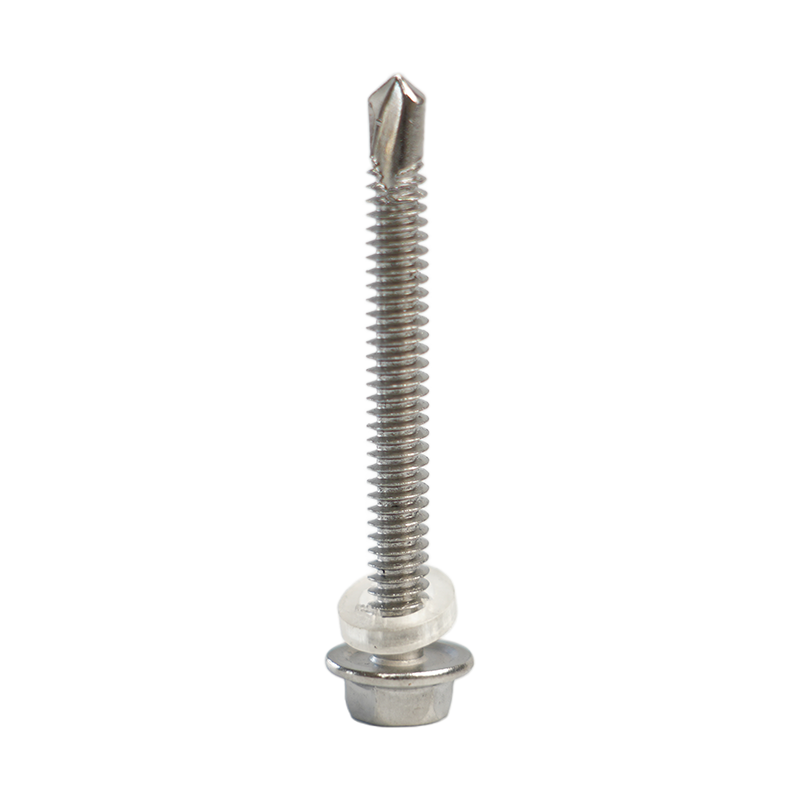
SUS410 stainless steel screw represents an excellent engineering solution where a balance of high strength, reasonable cost, and moderate corrosion resistance is required. From automotive parts to structural fastening and door window assemblies, its utility is widespread. Understanding its properties, limitations, and optimal applications—as detailed in this guide—is key to leveraging its benefits fully. As a manufacturer dedicated to "quality first, reputation first," Wuxi Sharp Metal Products Co., Ltd. is committed to producing reliable SUS410 fasteners that meet precise specifications, helping engineers and builders create durable and secure assemblies for a wide array of industries.
References
[1] Davis, J. R. (Ed.). (1994). Stainless Steels. ASM International. (Data on high-temperature properties of martensitic stainless steels).
[2] Japanese Industrial Standards Committee. (2012). JIS G 4303:2012 Rolled steels for general structure. (Standard specification for SUS grades).