 +86-15052135118

 Español
 Get In Touch


A 3/16 in drill bit for a 3/16 in screw sounds like obvious math. In concrete, it is the most common way to ruin a fixing before the trigger is even pulled.
Masonry screws, also sold as concrete screws or cement screws, are self-tapping anchors: they cut their own female thread into a slightly undersized pilot hole, so bit diameter, embedment depth and hole cleanliness decide the holding power, not driver torque. Used correctly, they let one installer with a hammer drill fix window frames, cable trays, junction boxes and equipment brackets in minutes, with a connection that can still be removed at demolition or rearrangement. Used carelessly, the screw spins in its hole, bites only a few millimeters of thread, or snaps at the head. This guide collects the numbers and the sequence that decide which outcome you get.
Content
- 1 What Masonry Screws Are and How They Grip Concrete
- 2 Hole Size and Embedment: The Two Numbers That Decide Holding Power
- 3 How to Install Masonry Screws: A Five-Step Sequence That Protects the Threads
- 4 Masonry Screws vs Expansion Anchors: Which Load Takes Which Fixing
- 5 Coatings, Corrosion and Choosing the Right Material Series
- 6 Masonry Screws FAQ: What Installers Ask Most
What Masonry Screws Are and How They Grip Concrete
A masonry screw is a case-hardened, self-tapping fastener that anchors by cutting an internal thread into concrete, brick or block, not by pressing outward against the hole wall.
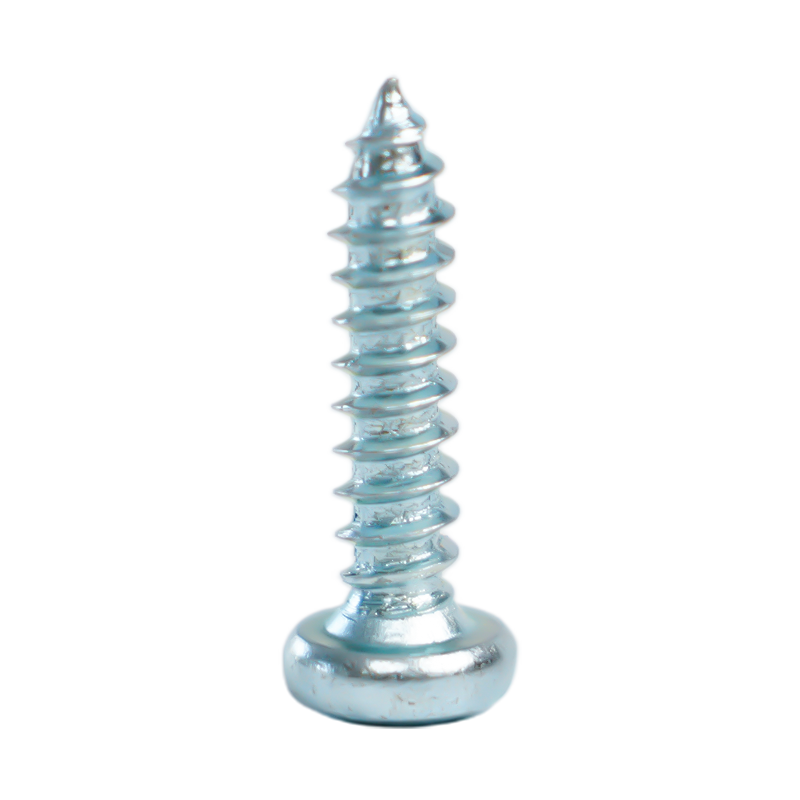
A masonry screw is a hardened self-tapping screw for concrete, block and brick that taps its own thread into a pre-drilled, slightly undersized hole. Its holding power comes from thread engagement with the base material, so capacity follows embedment depth, base material strength and hole quality.
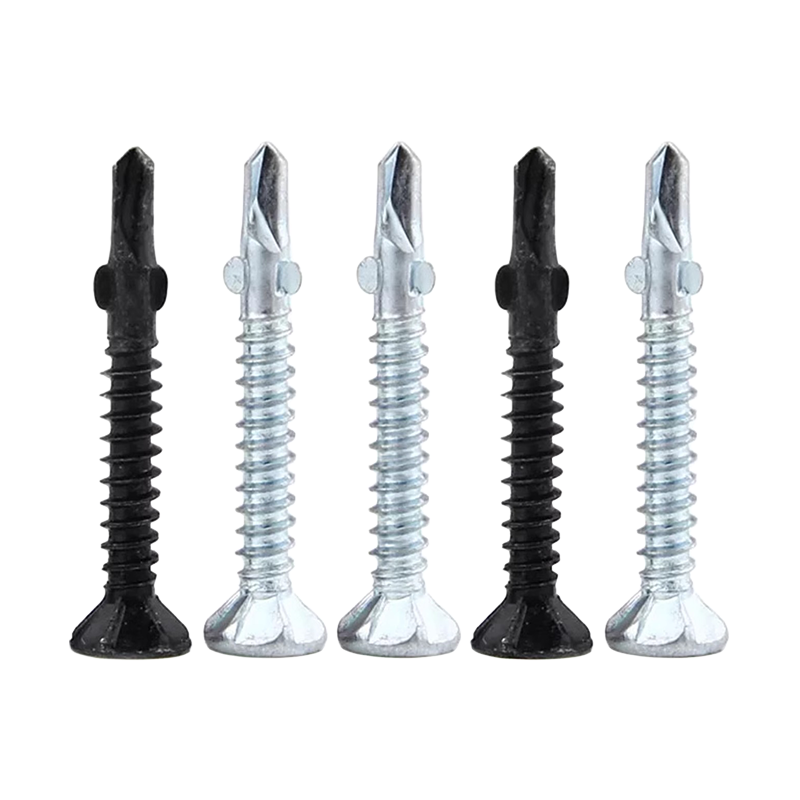
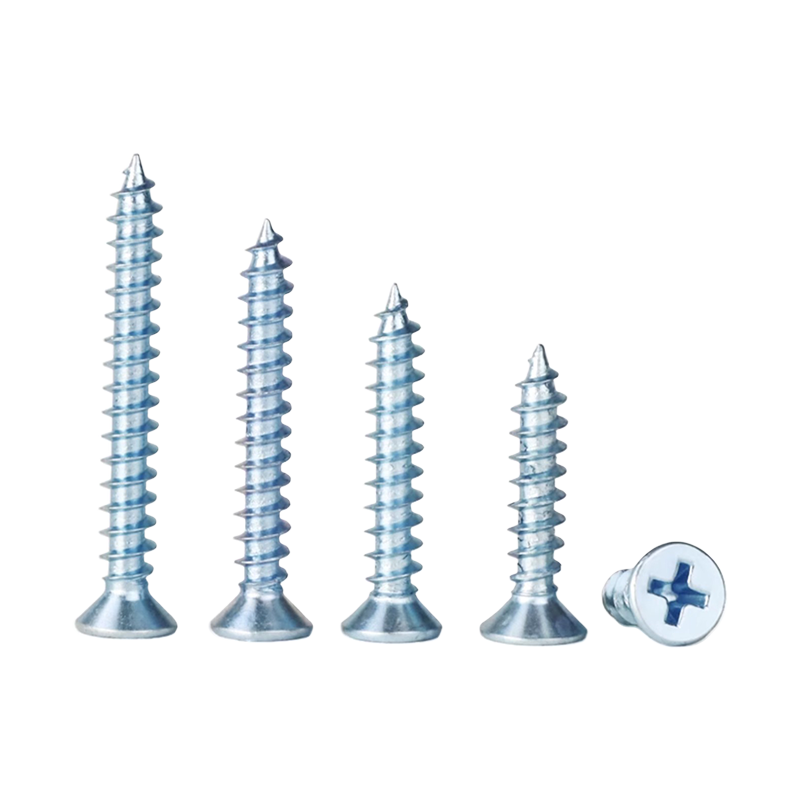
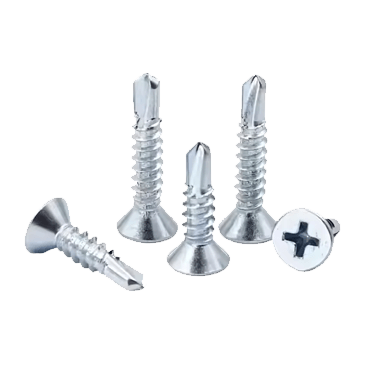
The design details follow from that working principle. The shank is case-hardened so the cutting tip stays sharp while the core stays tough; the thread is high-low profiled to clear dust as it cuts; heads come as hex washer for brackets or flat countersunk for frames and profiles. Because there is no expansion pressure, clamping stress on the base material is low, which matters near slab edges and in hollow block, where an expansion anchor can crack the very web it relies on.
Suppliers that treat cement screws as a dedicated category rather than a repackaged wood screw control the details that matter. Wuxi Sharp Metal Products Co., Ltd., a fastener manufacturer in Jiangsu, China that has produced screws since 1993 and holds more than 800 tons of standing stock, lists concrete self-tapping screws and German-style self-cutting cement screws as separate lines for exactly this reason: thread pitch, case depth and coating all have to be matched to mineral base materials.
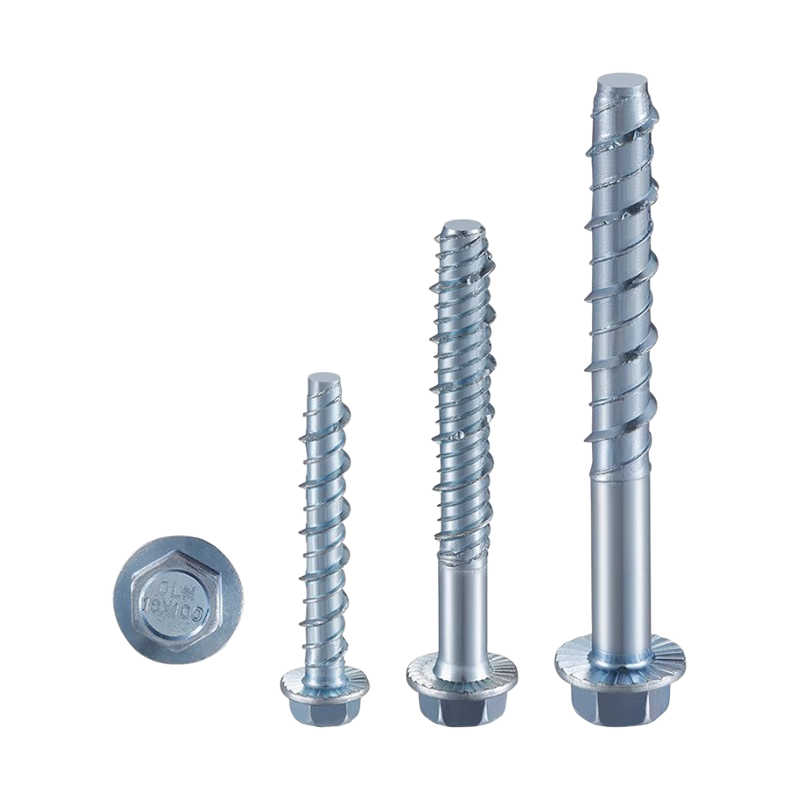 Concrete Self Tapping Screws for Masonry FixingA self-cutting cement screw designed for stable fastening in concrete and masonry. Placed here to show a dedicated concrete screw line where thread pitch, case depth and coating are matched to mineral base materials, with correct pilot drilling for reliable hold.View Product →
Hole Size and Embedment: The Two Numbers That Decide Holding Power
The hole decides the outcome: drill about 1/16 in smaller than the screw for imperial sizes, drill roughly 1/4 in deeper than the embedment you need, and blow the dust out before driving.
| Screw size | Carbide bit | Min embedment | Max embedment | Typical fixing |
| 3/16 in (4.8 mm) | 5/32 in (4.0 mm) | 1 in (25 mm) | 1-3/4 in (44 mm) | Cable clamps, junction boxes, small brackets |
| 1/4 in (6.6 mm) | 3/16 in (5.0 mm) | 1 in (25 mm) | 1-3/4 in (44 mm) | Shelving uprights, equipment feet, furring strips |
| 7.5 mm | 6.0 mm | 30 mm | 50 mm | Window frames and aluminum profiles, German style |
The logic behind the range is simple: the first 25 mm of thread carries most of the load, capacity grows with depth, but a standard concrete screw is not built to bury far beyond about 44 mm, so a deeper hole mostly adds drilling time and dust. Base material moves the numbers more than any size choice does.
How to Install Masonry Screws: A Five-Step Sequence That Protects the Threads
Most masonry screw failures happen during drilling and cleaning, not during tightening, so the sequence below matters more than the brand of tool on the belt.
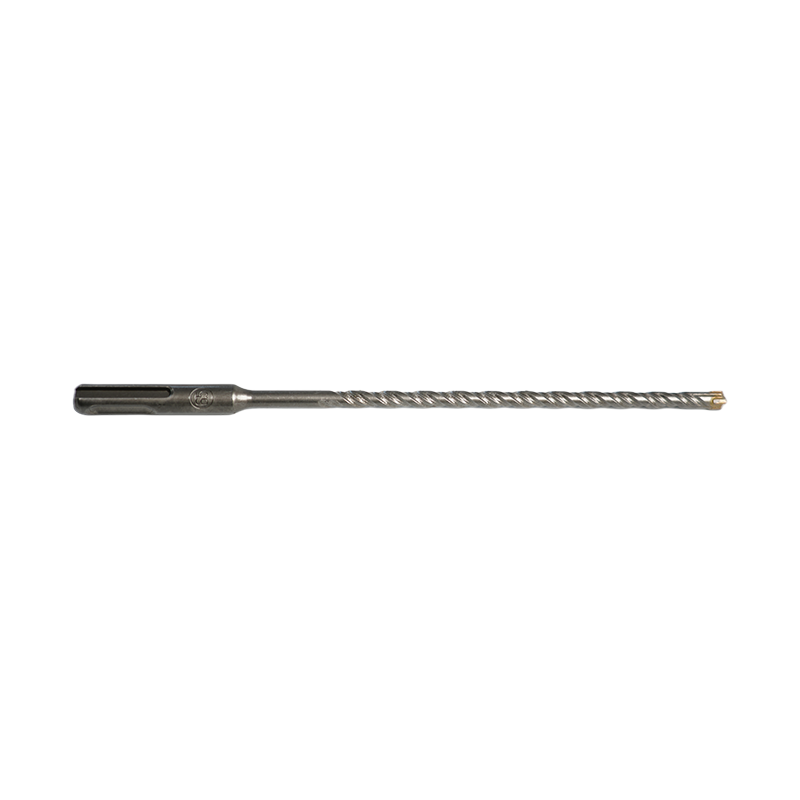 Special Drill Bit for Cement ScrewsA 6.5 mm alloy steel drill bit made for German-style cement self-cutting screws, with square shanks for heavy-duty hammers and round shanks for impact drills. Featured alongside the screws because drilling and hole cleaning determine most masonry screw failures.View Product →
Masonry Screws vs Expansion Anchors: Which Load Takes Which Fixing
Masonry screws are the right choice for light and medium removable fixings; heavy, vibrating or safety-critical loads still belong to expansion anchors.
- Window and door frames, where countersunk heads pull profiles tight against the wall
- Electrical boxes, conduits, cable clamps and sign brackets
- Renovation and maintenance work where speed and removability pay for themselves
- Fixings close to slab edges, where expansion pressure would risk cracking the base
- The load is structural: racking uprights, machinery feet, guardrail posts
- The load is dynamic or vibratory and could work a cut thread loose over time
- The connection is safety-critical or overhead and needs a documented design value
- The design requires embedment beyond the practical range of a thread-cut screw
The two systems share sites rather than compete: the crew that fixes profiles with masonry screws in the morning may set wedge anchors for a machine base in the afternoon. For a deeper technical comparison of how the two families differ in load path, hole tolerance and inspection, see this anchor bolt and expansion screw comparison.
Window work deserves one more note: where wind uplift or shear around openings is a concern, a dedicated window frame anchor provides a wider load path than a single screw, and it is the line most window hardware suppliers stock alongside their fixing range.
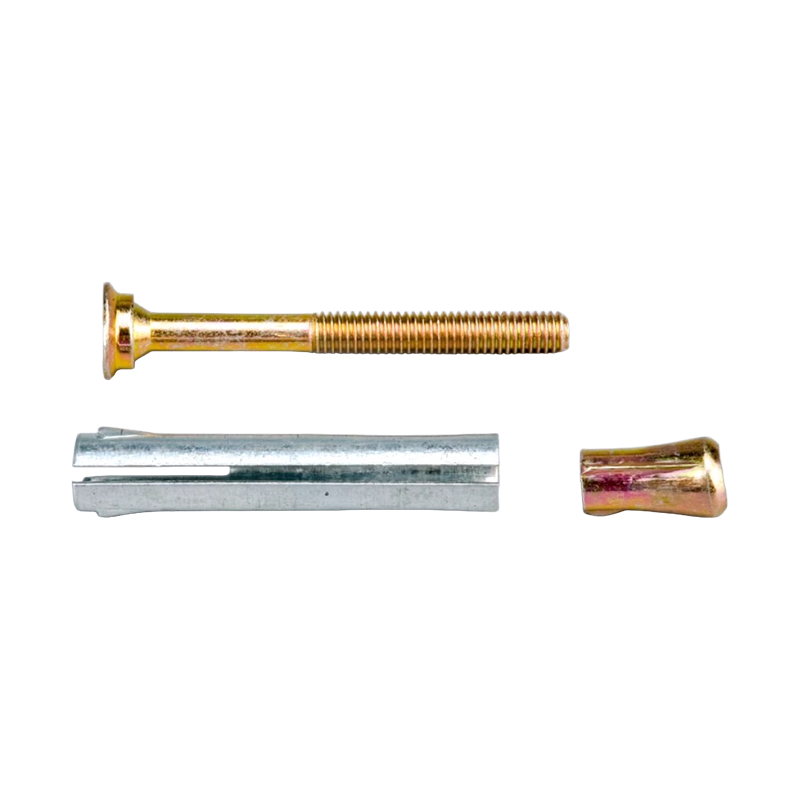 Window Frame Anchor for Wall FixingA frame anchor offering a wider load path than a single screw for fixing window frames to walls. Worth checking here where wind uplift or shear around openings is a concern, available in carbon steel and stainless grades.View Product →
Coatings, Corrosion and Choosing the Right Material Series
Coated carbon steel masonry screws serve dry interiors and protected exteriors; permanently damp or coastal jobs need stainless grades or a different anchoring strategy.
A case-hardened body cannot also be through-corrosion resistant, so the coating does the outdoor work: zinc plating and thicker organic ruspert-type layers are the standard options, and they differ far more in salt-spray endurance than in appearance. In continuously wet concrete, near pools, or within a few hundred meters of the coast, a coated screw will show surface rust staining long before it loses strength, but rust bleeding across a finished facade is a defect in its own right. Stainless versions trade some achievable hardness for corrosion resistance, so buy against the declared torque and load data instead of assuming parity with carbon steel.
Masonry Screws FAQ: What Installers Ask Most
Can masonry screws be used in brick?
Yes, in solid clay brick and in the solid face web of hollow block, as long as you achieve at least 1 in of embedment into solid material. Avoid soft sand-lime brick and hollow cores; where the brick is soft, an expansion or chemical anchor holds more predictably.
Why does my masonry screw keep spinning?
Three causes cover almost every case: an oversize hole from a worn or wrong-diameter bit, dust left in the hole, or a hole that was already stripped by an earlier attempt. The thread needs intact base material to cut into, and none of those conditions provide it.
How deep should a masonry screw go?
At least 1 in (25 mm) into the base material, with 1-1/4 in to 1-3/4 in (32 mm to 44 mm) as the working range for standard sizes, plus roughly 1/4 in of extra hole depth to collect drilling dust.
Can you remove and reuse masonry screws?
Removal is one of their advantages; reuse is not. A removed screw carries damaged threads, and the old hole already holds a cut thread that will not match, so refix in a new position with a new screw.