 +86-15052135118

 Español
 Get In Touch


Content
Drywall Screw Sizes: The Complete Reference
Drywall screws are measured by two dimensions: gauge (diameter) and length. The most common gauges are #6 and #8, while lengths range from ¾ inch to 3 inches depending on the application. Choosing the wrong size causes panel blowout, poor holding strength, or screws that punch through framing — all of which create rework. The table below covers the full standard range.
| Length | Gauge | Typical Use |
|---|---|---|
| ¾" | #6 | Thin panels, backerboard |
| 1" | #6 | ⅜" drywall to wood studs |
| 1-¼" | #6 | ½" drywall to wood studs (standard wall) |
| 1-⅝" | #6 | ⅝" type-X drywall to wood studs |
| 1-⅝" | #6 | Metal stud framing (fine thread) |
| 2" | #6–#8 | Double-layer drywall |
| 2-½" – 3" | #8 | Heavy panels, structural attachment |
What Size Drywall Screw for ½ Inch Drywall?
The correct screw for ½" drywall attached to wood studs is a 1-¼" coarse-thread #6 drywall screw. This length drives through the ½" panel and bites approximately ¾" into the stud — enough for a solid mechanical hold without over-penetrating. Undersized screws (1" or shorter) risk pulling through the panel face when the drywall is loaded or stressed by seasonal movement.
If you are fastening ½" drywall to metal studs, switch to a fine-thread screw of the same length. Coarse-thread screws strip metal tracks because the thread pitch is too wide to bite into thin-gauge steel. Fine-thread variants, sometimes labeled "S-type" or marked with a sharp point, are self-tapping and hold reliably in 20–25 gauge metal framing.
Ceiling vs. Wall
For ½" ceiling drywall, many pros step up to a 1-⅝" screw. The extra length compensates for occasional joist irregularity and helps resist sag over time — gravity loads ceilings more aggressively than walls. Building codes in some jurisdictions require 5/8" type-X on ceilings regardless of framing type, so confirm local requirements before ordering material.
Drywall Screw Head Size and Types Explained
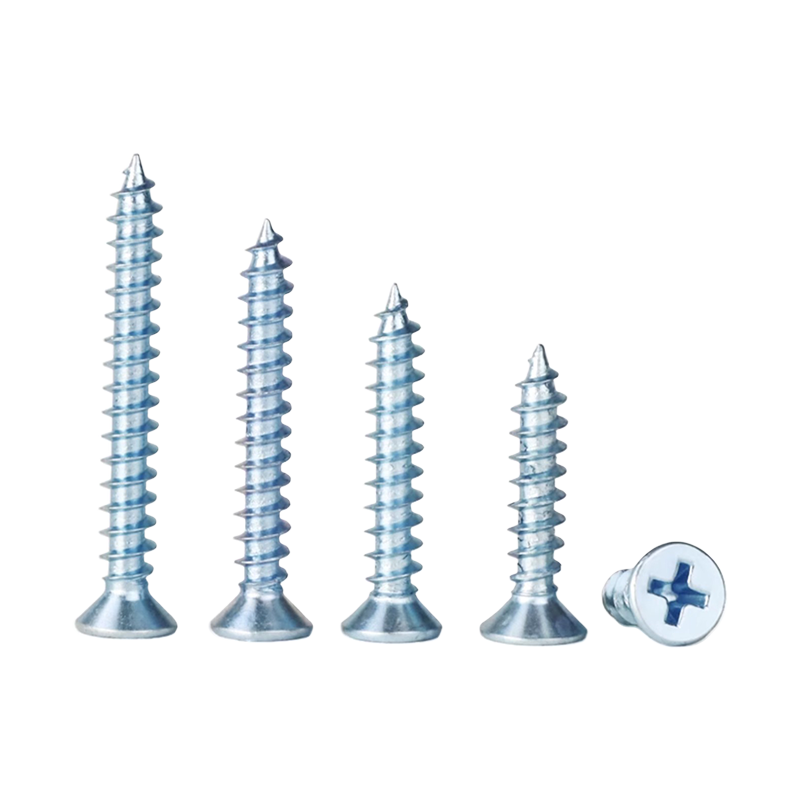
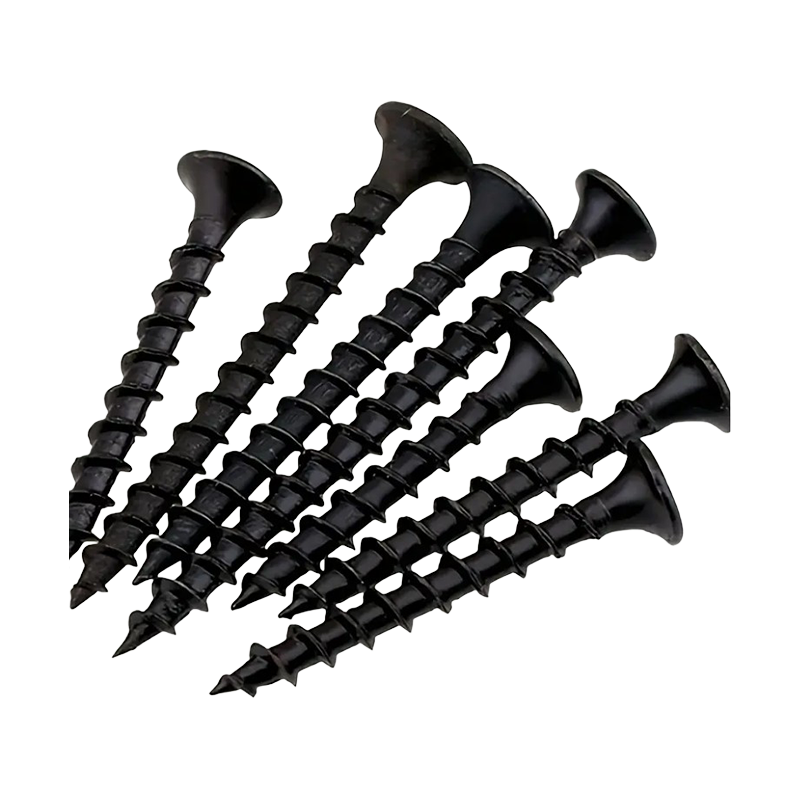
All standard drywall screws use a bugle head — a concave taper below the head flange that is designed to countersink flush with the board face without tearing the paper. The head diameter on a #6 screw is approximately 0.323 inches (8.2 mm), and on a #8 it is roughly 0.372 inches (9.4 mm). Both sizes accept a Phillips #2 driver bit, though a dedicated drywall dimpler bit provides more consistent depth control.
Driving depth matters: the head should sit slightly below the surface — creating a small dimple — without rupturing the paper face. A screw driven too deep breaks the gypsum core and loses holding power; one left proud (above the surface) creates a bump that telegraphs through finish coats. A screw gun with a depth-sensitive clutch solves both problems and dramatically speeds up production work.
Specialty Head Variants
- Trim-head screws — smaller head diameter, used where a minimal footprint is needed, such as prefinished panels or trim attachment.
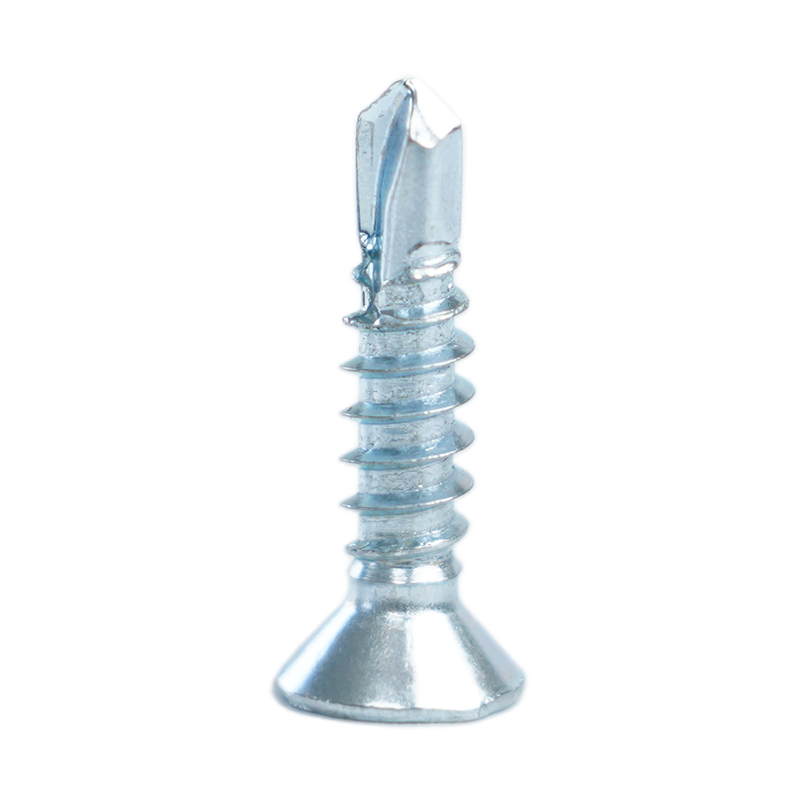
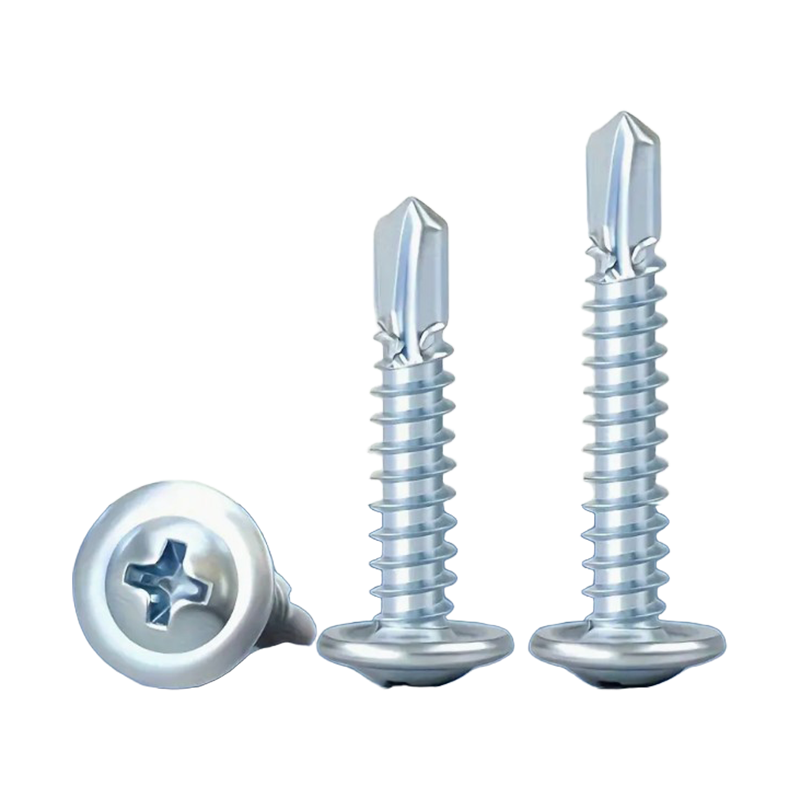
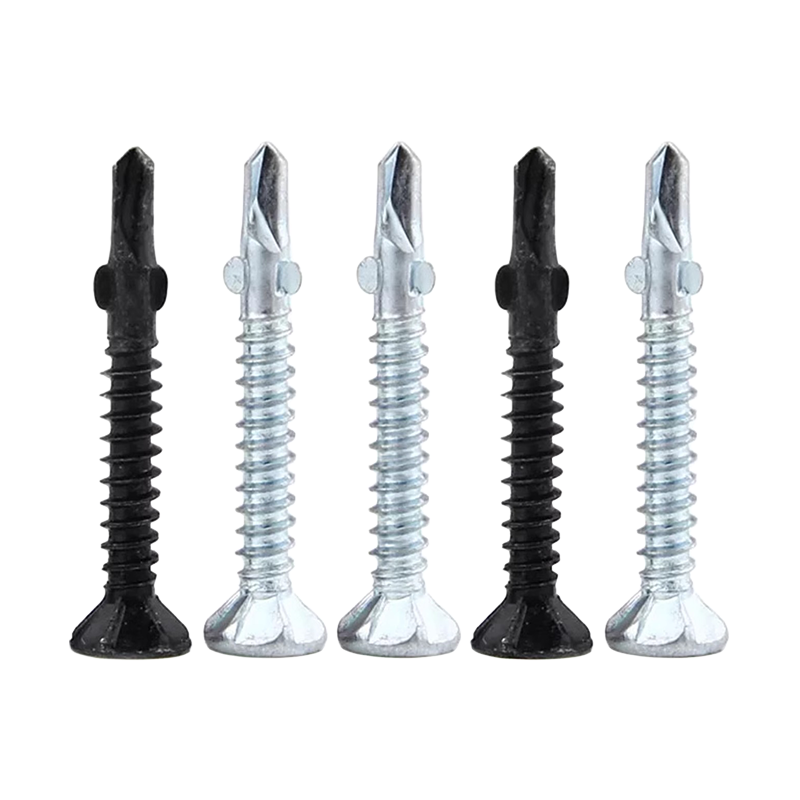
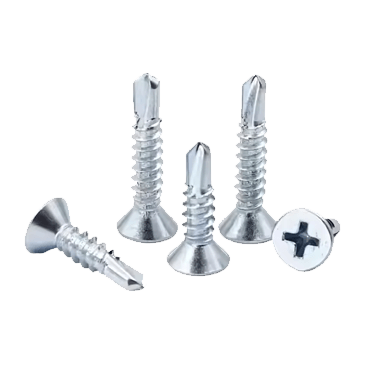
- Self-drilling (wafer-head) screws — used in metal framing systems; the wafer head bears on the track flange rather than the drywall surface.
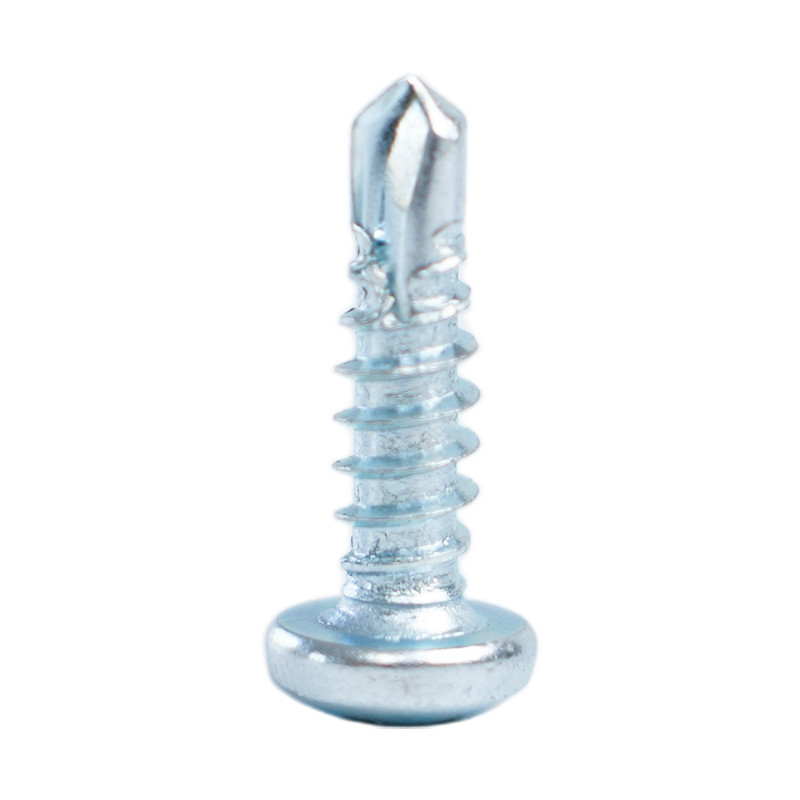
- Pan-head screws — flat-bottomed head for attaching metal accessories or clips, not for fastening drywall panels directly.
#6 vs #8 Drywall Screw: Which Should You Use?
The #6 screw is the industry default for single-layer residential drywall — it threads into standard kiln-dried lumber without splitting, and the narrower shank creates less risk of cracking the gypsum edge near board ends. The #8 is thicker (approximately 0.164" shank vs 0.138" for #6) and is reserved for situations that demand greater shear strength.
Use a #8 when:
- Installing double-layer or laminated drywall (the combined panel thickness requires more pull-through resistance).
- Fastening heavy sound-dampening panels or specialty board (e.g., Quietrock) where panel weight is significantly higher than standard gypsum.
- Driving into green or wet lumber where the larger thread has more material to grip.
For standard single-layer ½" or ⅝" residential and light commercial work, #6 at the correct length outperforms #8 in both installation speed and reduced paper-tear risk. Over-specifying screw gauge does not improve holding strength in normal gypsum board applications.
1-Inch Drywall Screws: When Are They Appropriate?
1" drywall screws are not suitable for standard ½" wall panels on wood framing. With only ½" of stud penetration, they do not meet the minimum ¾" embedment depth recommended by the Gypsum Association (GA-216 standard) for adequate holding strength. They are, however, correct for:
- ⅜" drywall panels on wood studs — the shorter length still achieves the required stud penetration.
- Securing the base layer of a laminated assembly before the face layer is applied — the face layer screws provide the structural connection.
- Patching small sections where the patch panel is thin and the surrounding framing is dense.
If you are unsure whether a 1" screw provides sufficient embedment for your specific application, step up to 1-¼". The marginal cost difference is negligible, and the additional ¼" of stud engagement significantly improves pull-out resistance.
How Many Screws Per Sheet of Drywall?
The GA-216 application standard specifies fastener spacing for code-compliant work. For a standard 4×8 sheet (32 sq ft) on walls, the typical screw count is 28–36 screws, depending on framing spacing and whether the panel is used on walls or ceilings.
Spacing by Framing Type
- 16" O.C. framing (walls): screws every 16" along each stud, 8" along edges. A full sheet hits approximately 5 studs, yielding 28–32 screws per sheet.
- 24" O.C. framing (walls): screws every 12" along each stud, 8" along edges, because the wider bay span increases flex risk. Yields approximately 24–28 screws per sheet.
- Ceilings (any framing): maximum 12" O.C. along joists, 8" on edges. A full sheet can require 36–42 screws to prevent sag and meet code.
For estimating purposes, plan on approximately 1 pound of 1-¼" #6 screws per 500–600 sq ft of single-layer wall drywall. A typical room of 400 sq ft of wall area needs roughly 100–130 screws total. Add 15–20% for waste, misdrives, and edge blocking you may not have anticipated during layout.
Common Spacing Mistakes
- Under-fastening field screws — spacing interior field screws more than 16" apart on 16" O.C. walls increases the chance of nail pops and board flex.
- Over-fastening edges — screws placed less than ⅜" from a board edge split the paper and gypsum, weakening the joint before compound is even applied.
- Skipping corner blocking — inside corners require a fastening surface; without backing, the board edge floats and the tape joint cracks.