 +86-15052135118

 Español
 Get In Touch


Content
Coarse Thread vs Fine Thread Drywall Screws
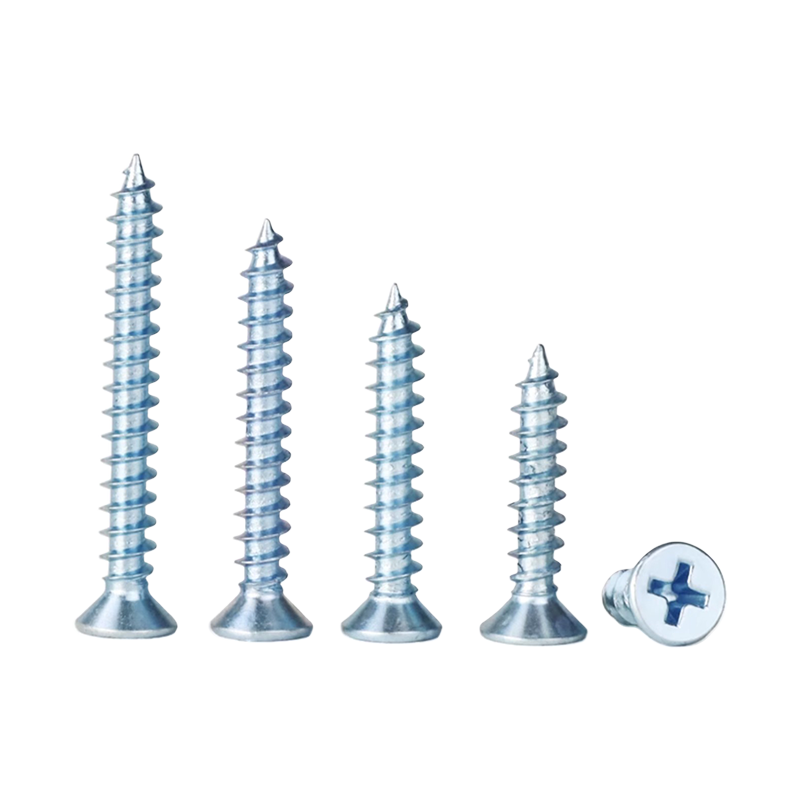
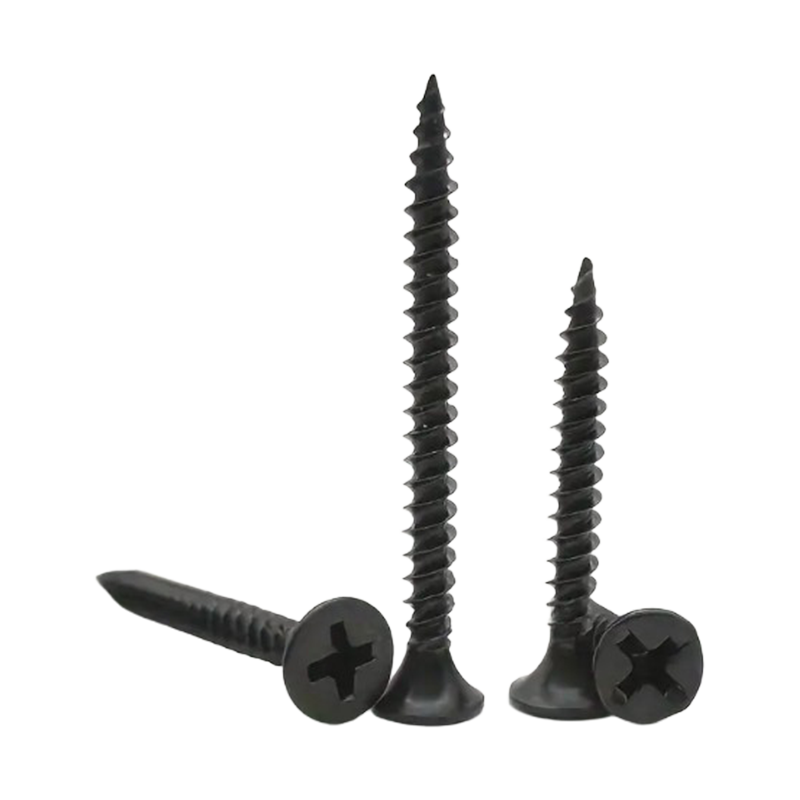
Thread type is the first decision when selecting drywall screws, and it comes down to what the screw is threading into. Coarse thread drywall screws are the standard choice for wood framing. Their wider, deeper threads bite aggressively into wood studs and joists, providing a secure hold without pre-drilling. Fine thread drywall screws, by contrast, are designed specifically for metal framing — the closely spaced threads grip sheet metal without stripping or spinning out.
Using the wrong thread type creates real problems. Drive a fine thread screw into a wood stud and it tends to strip rather than pull the drywall tight. Drive a coarse thread screw into metal framing and it often can't thread cleanly through the steel, leaving the panel loose. The rule is simple: coarse for wood, fine for metal.
| Feature | Coarse Thread | Fine Thread |
|---|---|---|
| Best substrate | Wood studs / joists | Metal framing |
| Thread spacing | Wide (approx. 18 TPI) | Close (approx. 25 TPI) |
| Driving ease into wood | Excellent | Poor — tends to strip |
| Driving into metal studs | Poor — won't thread cleanly | Excellent |
How Long Should Drywall Screws Be?
Screw length is determined by drywall thickness plus the penetration depth needed in the framing. As a general benchmark, screws should penetrate at least 5/8 inch into wood framing to achieve a reliable hold — deeper penetration adds holding strength, but excessively long screws are harder to drive flush without overdriving.
Screw Size for 1/2-Inch Drywall
For standard 1/2-inch drywall panels, the most common choice is a #6 x 1-1/4 inch coarse thread screw for wood framing. This gives approximately 3/4 inch of penetration into the stud — enough to hold securely without punching through the back side of thinner lumber. For metal framing, the equivalent fine thread version in the same 1-1/4 inch length is standard.
Screw Size for 5/8-Inch Drywall
Thicker 5/8-inch panels — commonly used for ceilings, fire-rated assemblies, and soundproofing applications — require longer fasteners. #6 x 1-5/8 inch screws are the standard size for 5/8-inch drywall, maintaining that minimum 5/8-inch framing penetration. In some ceiling applications where panels must bear their own weight, 2-inch screws are used to maximize pull-out resistance. For double-layer installations, screws must be sized to penetrate the total combined thickness of both sheets plus the required framing depth.
A quick reference:
- 1/2-inch drywall on wood framing → 1-1/4 inch screws
- 1/2-inch drywall on metal framing → 1-1/4 inch fine thread screws
- 5/8-inch drywall on wood framing → 1-5/8 inch screws
- 5/8-inch drywall on metal framing → 1-5/8 inch fine thread screws
- Double-layer 1/2-inch on wood → 2 inch or longer screws
How Many Drywall Screws Per Sheet
Screw count per panel affects both the structural integrity of the installation and the amount of taping and finishing work required — more screws means more dimples to fill. Industry guidelines from the Gypsum Association and most building codes align around a consistent standard: screws are placed every 16 inches in the field (the center area of the panel) and every 8 inches along edges where panels meet at a joint.
For a standard 4 x 8 foot sheet installed on walls with studs spaced 16 inches on center, this typically works out to 28 to 32 screws per sheet. Some professionals use the round figure of approximately 32 screws per sheet as a quick estimating number for purchasing. Ceiling installations warrant slightly tighter spacing — screws every 12 inches in the field — which pushes the per-sheet count higher, often to 36 or more.
For project estimating, a useful rule of thumb is one pound of drywall screws per 500 square feet of drywall. On a typical room, plan for roughly:
- Walls (16" OC framing): ~28–32 screws per 4×8 sheet
- Ceilings: ~36–40 screws per 4×8 sheet
- Walls (24" OC framing): ~20–24 screws per 4×8 sheet
Always add 10–15% to your screw order to account for stripped heads, miscounts, and waste. Sheetrock screws are inexpensive; running short mid-job is not.
Common Mistakes When Driving Drywall Screws
The most frequent error is overdriving — sinking the screw head so deep that it tears through the paper facing. The screw should create a slight dimple that can be filled with joint compound, but the paper should remain intact. A dimpler attachment on a screw gun sets the depth automatically and is worth using on any job with more than a few sheets.
Underdriving — leaving the head proud of the surface — is the opposite problem. Any screw that protrudes will telegraph through the finished paint as a bump and will also catch on the taping knife during finishing.
Edge distance matters as well. Screws should be placed no closer than 3/8 inch from a cut edge and 3/4 inch from a factory edge. Too close to an edge and the gypsum crumbles rather than gripping the thread, leaving a fastener that holds nothing. Keeping screws a consistent distance from edges and spacing them evenly along studs produces a flat, stable surface that takes compound cleanly.