 +86-15052135118

 Español
 Get In Touch


Fasteners & Fixings
Content
- 1 Chipboard Screws vs. Wood and Drywall Screws: How to Choose the Right Size and Thread
- 2 Chipboard Screw vs. Wood Screw
- 3 Chipboard Screw vs. Drywall Screw
- 4 Coarse Thread vs. Fine Thread Screws
- 5 Torx, Phillips, and Pozi Drive Heads on Chipboard Screws
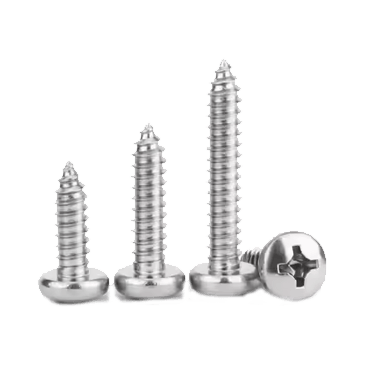
- 6 Stainless Steel Chipboard Screws
- 7 Chipboard Screw Size Guide: What Size Do You Need?
- 8 How to Choose the Best Screws for MDF and Particle Board
Chipboard Screws vs. Wood and Drywall Screws: How to Choose the Right Size and Thread
Chipboard screws, wood screws, and drywall screws can look nearly identical on a shelf, but each is engineered for a different material's fiber structure, and picking the wrong one is one of the most common reasons fasteners strip out or fail to hold in particle board and MDF.
Chipboard Screw vs. Wood Screw
Standard wood screws are designed around solid lumber's long, continuous grain, using a relatively coarse thread that bites into fibrous wood strands running along the length of a board. Chipboard, however, doesn't have that continuous grain structure — it's made of compressed particles bonded with resin — so a coarse wood screw thread tends to compress and crush the surrounding particles rather than gripping them securely, which often leads to a loose, weak hold or a stripped-out fastener point.
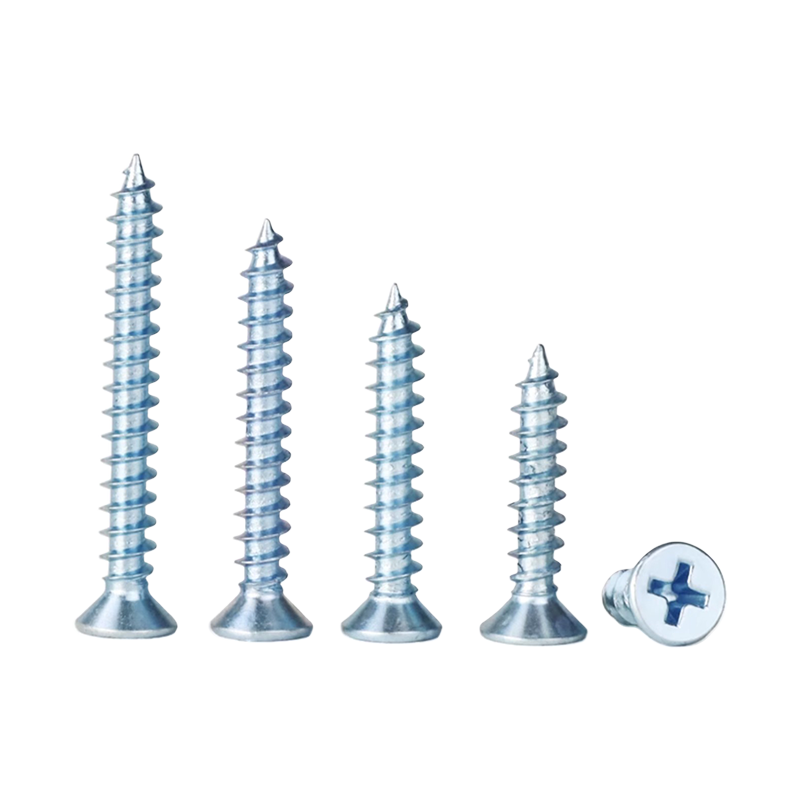
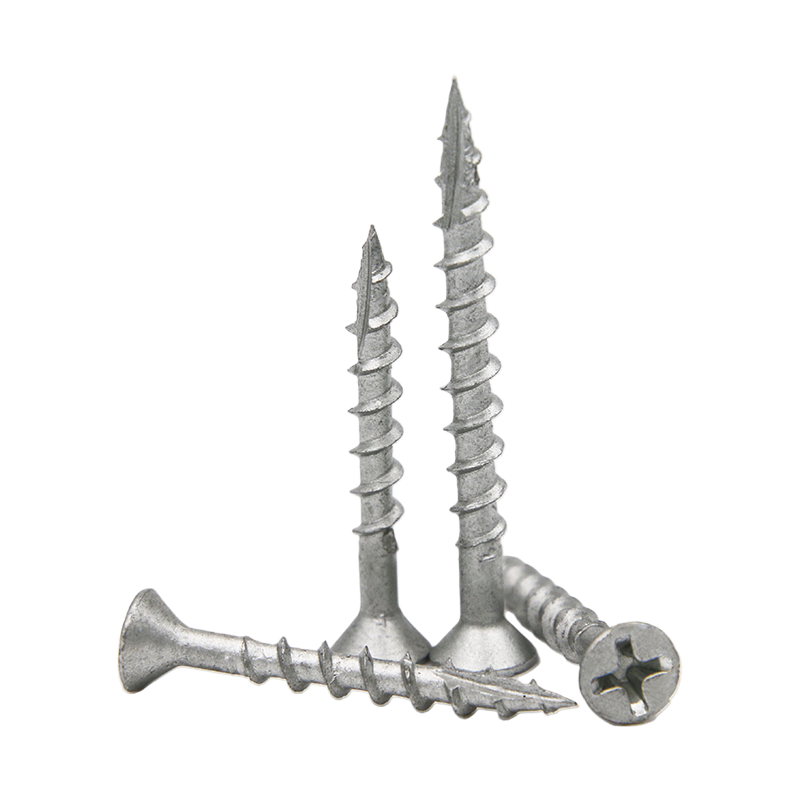
Chipboard screws address this with a finer, more closely spaced thread that engages more contact points along the same length of shank, spreading holding force across the low-density particle material more effectively than a coarse wood screw thread can. The sharper, more aggressive thread profile on a chipboard screw is also generally better suited to starting its own path in board material without a pilot hole, whereas wood screws more often benefit from or require pre-drilling to avoid splitting solid lumber.
Chipboard Screw vs. Drywall Screw
Drywall screws share a superficially similar fine-thread, self-tapping design with chipboard screws, which leads some people to assume the two are interchangeable — but they're built for very different holding requirements. Drywall screws are engineered to hold gypsum board against wood or metal studs, a relatively light-duty application where the screw mainly needs to resist the panel pulling away from the framing rather than bear significant structural or shear load.
Chipboard screws, by contrast, are made from a harder steel and designed to withstand higher shear and pull-out forces typical in furniture assembly and structural panel joints, where the fastener may be bearing actual load-bearing weight rather than simply holding a lightweight panel in place. Using drywall screws in furniture or structural chipboard applications risks shearing or snapping under load that a proper chipboard screw would handle without issue, since drywall screws are generally more brittle and not rated for the same mechanical stress.
Coarse Thread vs. Fine Thread Screws
Thread coarseness affects how a screw interacts with the material around it, and the right choice depends heavily on the density and structure of the board being fastened. Coarse threads have fewer, larger thread ridges spaced further apart, which work well in low-density materials like softwood or particle board by displacing more material per turn and creating strong mechanical grip without excessive driving torque.
Fine threads pack more, smaller ridges into the same length, engaging more contact points and generally performing better in denser materials like hardwood or metal, where fewer, larger threads would struggle to bite in cleanly. For chipboard and MDF specifically, thread design tends to sit in a middle ground — fine enough to engage the particle structure effectively, but not so fine that it fails to displace enough material to create a strong initial grip.
Torx, Phillips, and Pozi Drive Heads on Chipboard Screws
Drive type affects installation speed and how much torque can be applied before the driver slips out of the screw head — a common frustration known as cam-out. Torx chipboard screws use a star-shaped recess that provides significantly more surface contact between the driver bit and the screw head compared to Phillips or Pozi drives, which reduces cam-out substantially and allows higher driving torque without stripping the screw head.
This makes Torx drive screws a common choice for automated or high-volume furniture assembly, where consistent, fast driving with minimal driver slippage matters for both speed and product quality. Phillips and Pozi drives remain widely used in general hardware store chipboard screws and are perfectly adequate for typical DIY and light assembly work, though they're more prone to cam-out under higher torque or repeated use.
Stainless Steel Chipboard Screws
Stainless steel chipboard screws offer significantly better corrosion resistance than standard zinc-plated steel, making them the better choice for outdoor furniture, marine applications, or any environment with sustained moisture or humidity exposure. The trade-off is cost — stainless steel screws typically cost more than zinc-plated equivalents — so they're generally reserved for applications where corrosion resistance is a genuine requirement rather than used as a default for standard indoor furniture assembly.
Chipboard Screw Size Guide: What Size Do You Need?
| Panel Thickness | Typical Screw Length | Typical Gauge |
|---|---|---|
| 12–15 mm | 25–30 mm | No. 6–7 (3.5mm) |
| 16–19 mm | 30–40 mm | No. 7–8 (4mm) |
| 20–25 mm | 40–50 mm | No. 8–10 (4–5mm) |
General sizing guide — actual requirements vary by joint type and load
As a general rule of thumb, screw length should be roughly twice the thickness of the panel being fastened into for a solid mechanical hold, while leaving enough clearance to avoid the screw tip breaking through the opposite face of the panel.
How to Choose the Best Screws for MDF and Particle Board
- Match thread type to the material — fine, self-tapping chipboard threads for particle board and MDF rather than general wood screw threads
- Size length to panel thickness — roughly double the panel thickness as a starting reference point, adjusted for joint type
- Choose drive type based on volume — Torx for high-volume or automated assembly, Phillips or Pozi for general hardware use
- Select coating based on exposure — zinc plating for indoor use, stainless steel for moisture-prone or outdoor applications
- Avoid substituting drywall screws — reserve drywall screws for drywall applications rather than structural or load-bearing chipboard joints