 +86-15052135118

 Español
 Get In Touch


Fasteners & Fixings
Content
- 1 Chipboard Screws Explained: Design, Types, and Applications in Furniture and Woodworking
- 2 What Is a Chipboard Screw?
- 3
- 4 Self-Tapping Design: Why Chipboard Screws Work Differently
- 5 Chipboard Screw Uses in Furniture and Woodworking
- 6 Double Countersunk Chipboard Screws
- 7 Zinc Plated Chipboard Screws and Corrosion Resistance
- 8 Choosing the Right Chipboard Screw
Chipboard Screws Explained: Design, Types, and Applications in Furniture and Woodworking
A chipboard screw looks like an ordinary wood screw at first glance, but its thread design is built specifically around the loose, compressed fiber structure of particle board and MDF, which is why substituting a standard wood screw often leads to stripped holes and weak joints in these materials.
What Is a Chipboard Screw?
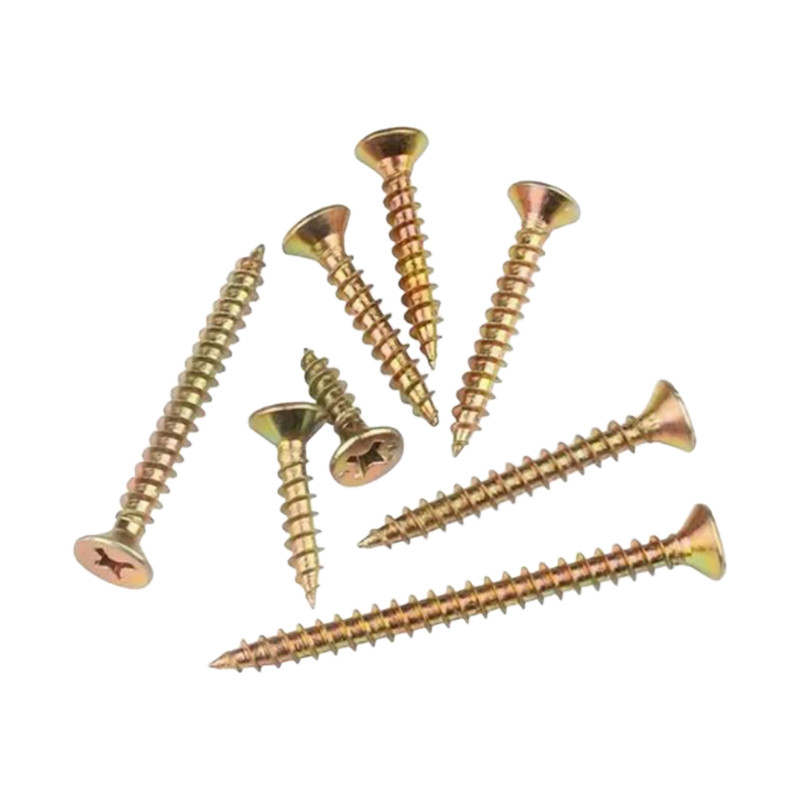
A chipboard screw is a self-tapping fastener designed to grip effectively in particle board, chipboard, MDF, and similar engineered wood panels without requiring a pre-drilled pilot hole in most applications. Unlike solid wood, chipboard is made of compressed wood particles and resin, which gives it a different fiber structure that doesn't hold a standard coarse wood screw thread as securely — chipboard screws address this with a sharper, more aggressive thread profile designed to bite into and compress that particle structure rather than tear through it.
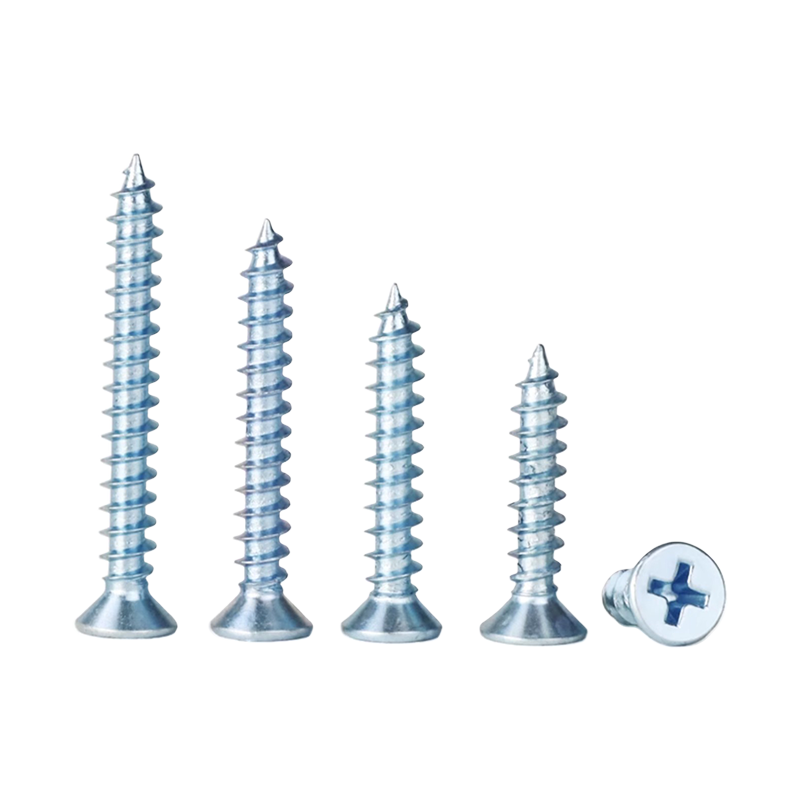
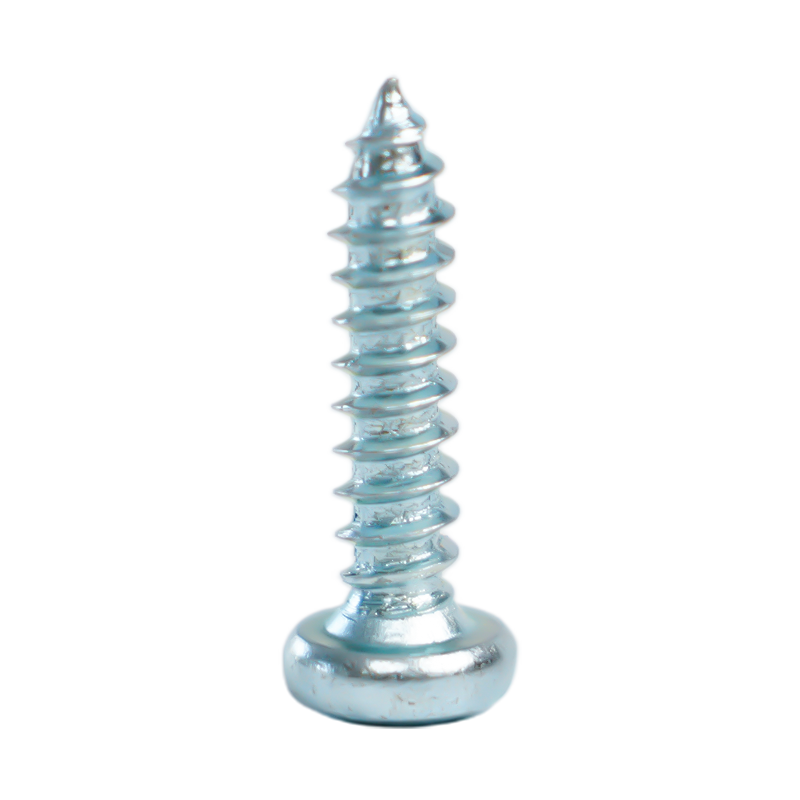
The defining features of a chipboard screw are a fully threaded or mostly threaded shank, a sharp gimlet or self-tapping point that starts its own hole under moderate pressure, and a thread pitch calibrated to maximize pull-out resistance in low-density board material. These design choices work together to create strong mechanical grip in a material that would otherwise be prone to the fastener spinning loosely or crumbling the surrounding board.
Sharp Self-Tapping Point
Starts its own hole in chipboard or MDF without always requiring a pilot hole, reducing installation time.
Fine, Aggressive Thread
Compresses and grips the loose particle structure of engineered board material for stronger pull-out resistance.
Countersunk Head
Sits flush or below the panel surface once driven, allowing for a clean finish or covering with edge banding or filler.
Self-Tapping Design: Why Chipboard Screws Work Differently
The self-tapping thread on a chipboard screw is engineered to cut its own path through the board material as it's driven, displacing and compressing surrounding fibers rather than simply pushing them aside. This matters because chipboard doesn't have the long, continuous wood grain that gives solid lumber its holding strength — instead, the screw's thread has to create its own mechanical anchor point within a relatively uniform but lower-density material.
Thread pitch — the spacing between thread ridges — is typically finer on chipboard screws than on general-purpose wood screws, since a finer pitch increases the number of thread engagements along a given screw length, spreading holding force across more contact points. This is part of why chipboard screws generally shouldn't be substituted with coarse-thread wood screws in particle board applications; the coarser thread simply doesn't engage the material as effectively, leading to reduced pull-out strength and a higher chance of the screw working loose over time.
Chipboard Screw Uses in Furniture and Woodworking
Flat-pack and RTA furniture
Assembling cabinet panels, shelving units, and case furniture built from particle board or MDF.
Cabinet and shelving construction
Joining panel sections and attaching hardware where standard wood screws would risk stripping the board.
Hinge and hardware mounting
Securing hinges, brackets, and fittings directly into chipboard or MDF panel edges and faces.
General woodworking repairs
Reinforcing or repairing joints in furniture and fixtures built from engineered wood panels.
Double Countersunk Chipboard Screws
Double countersunk chipboard screws feature a head design with two angled bearing surfaces rather than one, which allows the screw to seat flush regardless of small variations in drilling angle or panel surface irregularities. This double-angle head design is especially useful in furniture assembly, where slight misalignment between panel holes is common, since it lets the screw sit flush and evenly seated even when the entry angle isn't perfectly perpendicular to the surface.
The countersunk profile also allows the screw head to sit flush with or slightly below the panel surface, which is important both for a clean finished appearance and for allowing edge banding, veneer, or filler to be applied over the fastener location without an obstruction.
Zinc Plated Chipboard Screws and Corrosion Resistance
Zinc plating adds a thin protective coating to the steel screw body, providing a meaningful level of corrosion resistance for indoor furniture and general woodworking applications where the screw won't be exposed to significant moisture. This plating also gives the screw a bright, consistent finish, which matters for visible fastener applications where appearance is part of the specification.
For applications with higher moisture exposure — kitchen cabinetry, bathroom furniture, or humid storage environments — a heavier-duty coating or stainless steel option is generally a better fit than standard zinc plating, since standard zinc coatings are suited to general indoor use rather than sustained damp conditions.
Choosing the Right Chipboard Screw
| Consideration | Why It Matters |
|---|---|
| Screw length | Should suit panel thickness without penetrating through the opposite face |
| Head type | Countersunk for flush finishes; double countersunk for improved seating on angled entries |
| Coating/finish | Zinc plating for general indoor use; heavier coatings or stainless for moisture exposure |
| Thread type | Fine, self-tapping thread specific to chipboard rather than general-purpose wood screw thread |
Key specifications to check when selecting chipboard screws for a project