 +86-15052135118

 Español
 Get In Touch


Content
What Makes a Chipboard Screw Different From a Standard Wood Screw
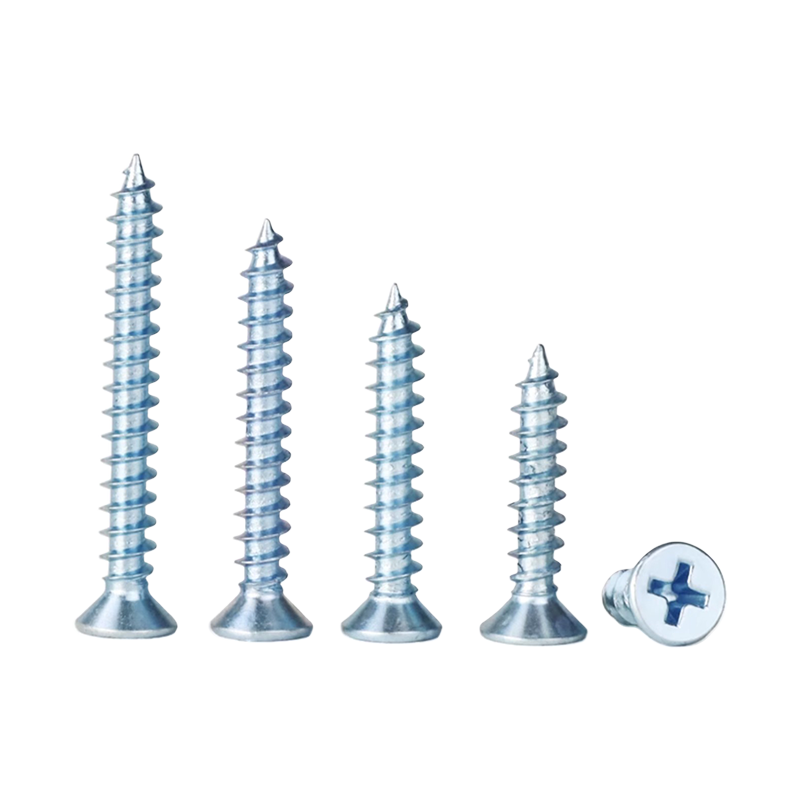
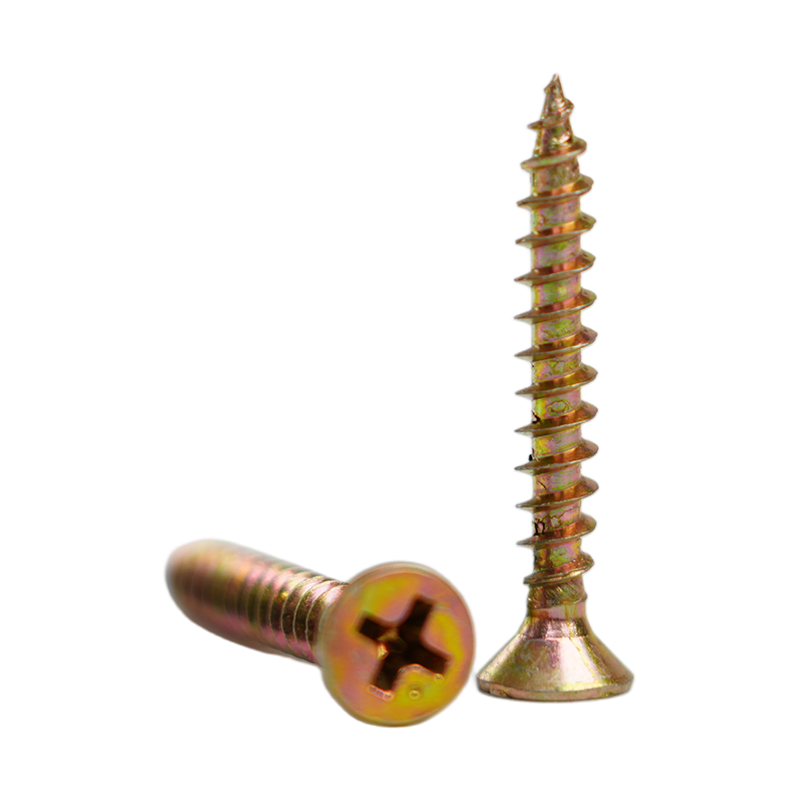
A chipboard screw is a fully-threaded fastener engineered specifically for particleboard, chipboard, MDF, and other engineered wood panels — materials with low fiber cohesion that strip out easily under a coarse, widely-spaced thread. Unlike a traditional wood screw, which uses a partial thread and a tapered shank to draw two solid-wood pieces together, a chipboard screw is threaded almost to the head. Full threading maximizes the contact surface inside the board's compressed wood fibers, which is the single biggest factor in pull-out resistance for low-density substrates.
The second defining feature is thread geometry. Chipboard screws typically use a sharp, asymmetric thread angle (around 30–40°) with a deep thread height relative to the shank diameter. This profile compresses and locks chipboard fibers around the fastener rather than shearing through them, which is why a 4mm chipboard screw can outperform a 5mm wood screw in particleboard pull-out tests by a meaningful margin.
Head Types and Drive Systems
Most chipboard screws ship with one of three head profiles, each suited to a different joint condition:
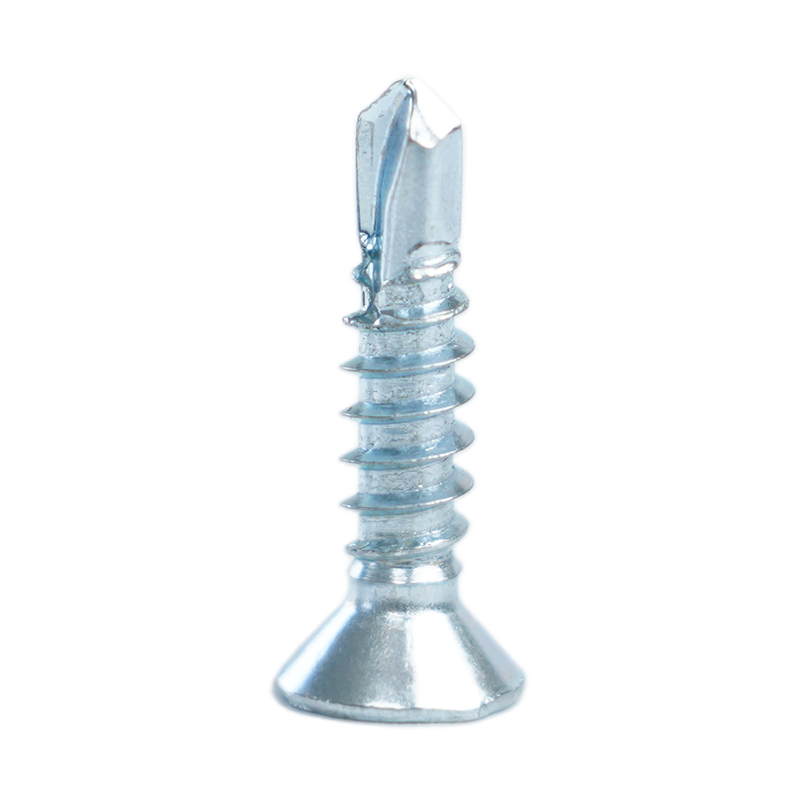
Countersunk Head
Sits flush with the panel surface. The standard choice for cabinet carcasses, furniture panels, and any joint where a protruding head would interfere with a mating surface.
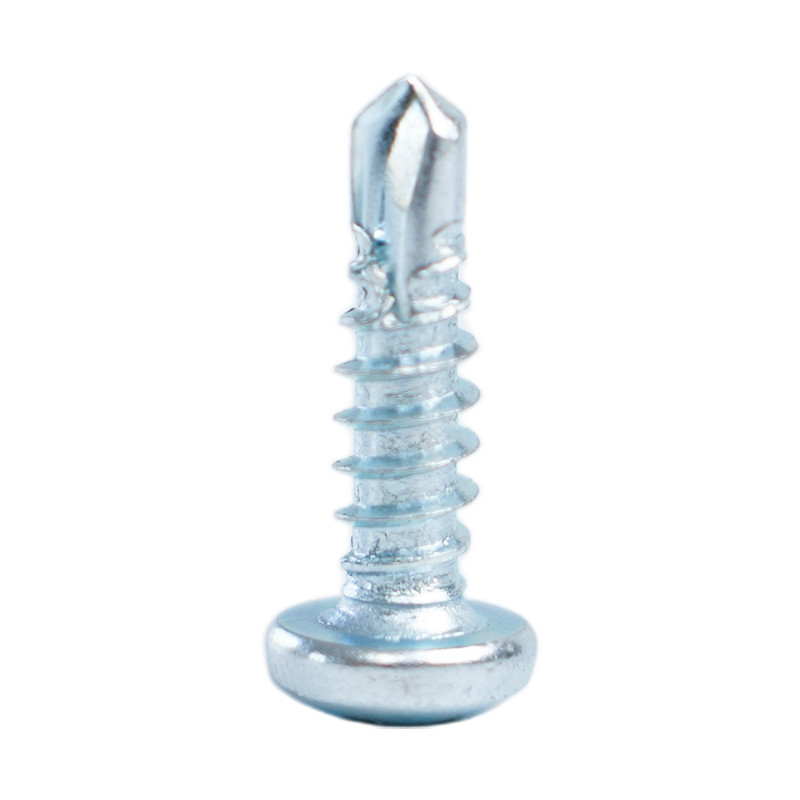
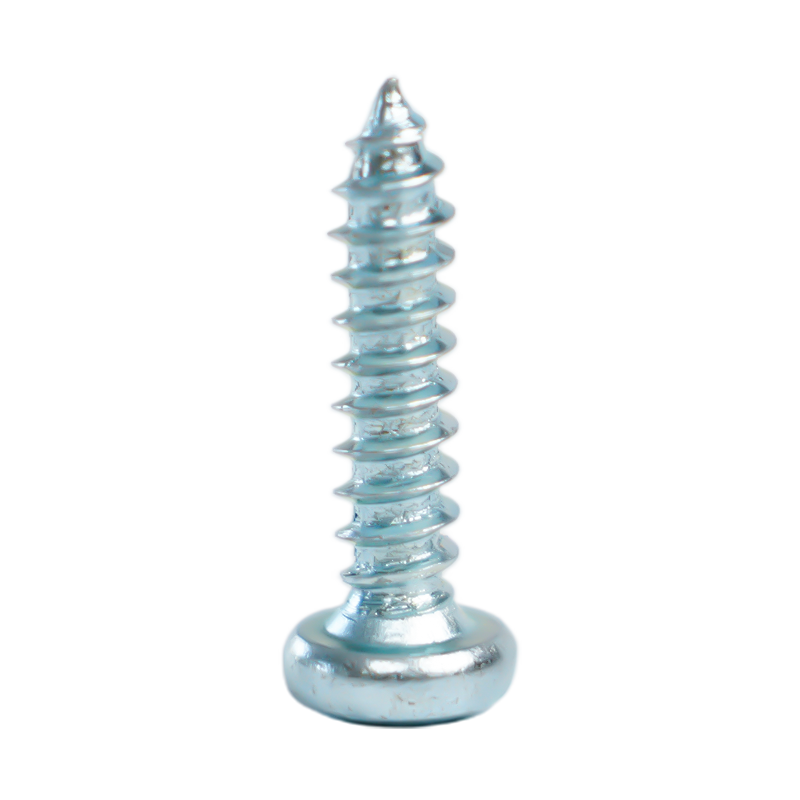
Pan Head / Flange Head
Provides a wider bearing surface against soft sheet material, reducing the chance of the head pulling through thin chipboard under load — common in shelving brackets and hinge plates.
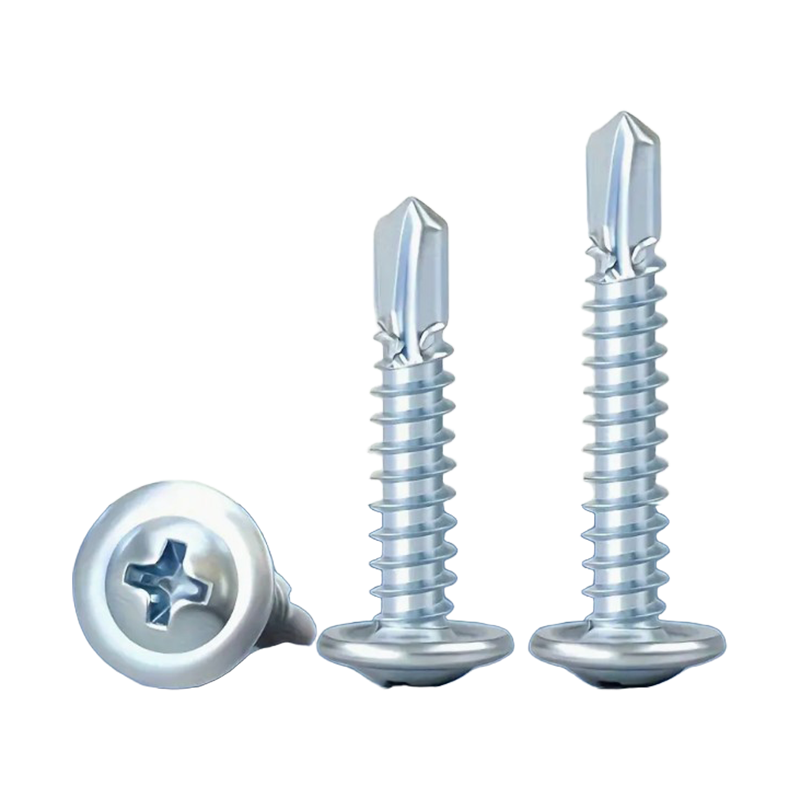
Wafer Head
A low-profile, broad head used where a countersink is impractical, such as fixing back panels or face-frame components without pre-drilling a countersink bore.
Drive type matters more here than in general carpentry. Pozidriv (PZ) and Torx (TX) drives dominate chipboard screw production because they resist cam-out at the higher driving torque needed to seat a full-thread screw into dense board — a Phillips driver will strip the recess well before the screw reaches its seating depth.
Sizing and Pilot Hole Guidance
Chipboard screws are sized by shank diameter and length, commonly from 3.0mm to 6.0mm in diameter and 12mm to 100mm in length. Diameter selection should track panel thickness, not just load — a screw that's too thick relative to a thin panel risks blowing out the edge.
As a working rule, the pilot hole should run roughly 70–80% of the screw's minor (core) diameter — enough to prevent panel splitting at the edge, but not so large that thread engagement drops off. Skipping the pilot hole entirely in particleboard is the most common cause of stripped-out screw holes in furniture assembly.
Material and Coating Options
- Zinc-plated carbon steel — the standard for indoor furniture and cabinetry; offers basic corrosion resistance at low cost.
- Yellow zinc / zinc-yellow passivated — adds a thicker passivation layer for slightly better humidity resistance, often specified for kitchen and bathroom cabinetry.
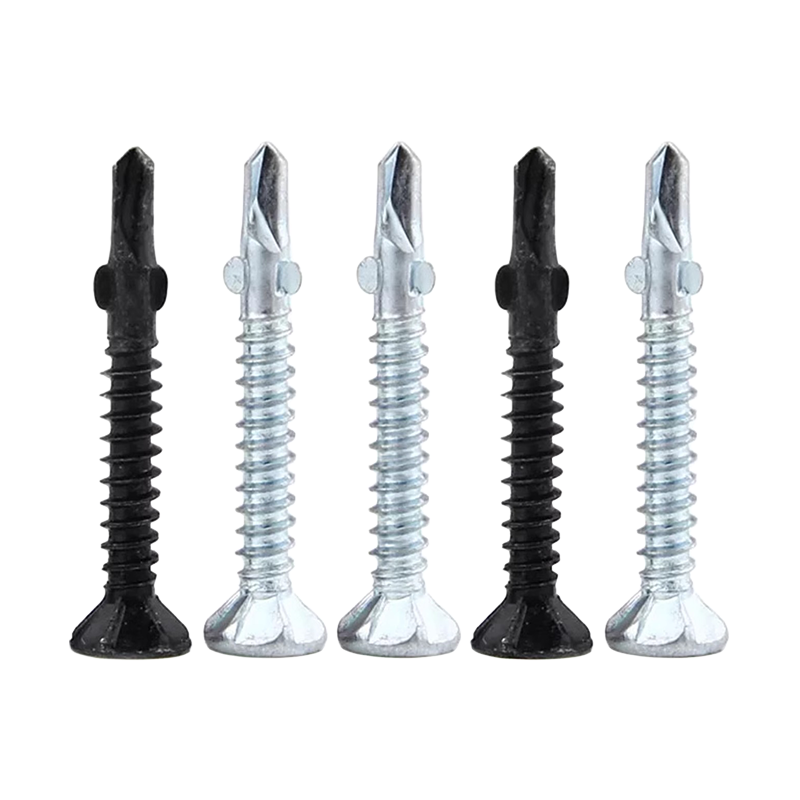
- Black phosphate — favored where a low-glare, oil-retentive finish is wanted, mainly on darker hardware components.
- Stainless steel (A2/304) — used in marine furniture, outdoor cabinetry, or any panel assembly exposed to moisture, at a notable cost premium over plated carbon steel.
Chipboard Screw vs. Other Panel Fasteners
Chipboard screws are often confused with confirmat screws and standard wood screws, but the three serve different joints:
- Chipboard screw vs. wood screw: The chipboard screw's full thread and sharper angle give it far better holding power in low-density board; a wood screw's partial thread and shank are designed for clamping solid wood, not gripping compressed fiber.
- Chipboard screw vs. confirmat screw: Confirmat screws have a much larger diameter (around 5–7mm) with a blunt, shallow thread designed for edge-to-face panel joints, typically requiring a stepped pilot hole. Chipboard screws are slimmer and better suited to face-fixing and general carcass assembly.
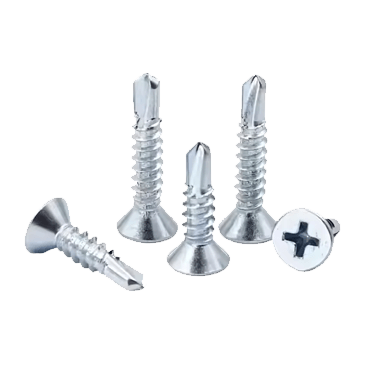
- Chipboard screw vs. self-tapping metal screw: Self-tapping screws are hardened for cutting into sheet metal and have a finer thread pitch; driving one into chipboard tends to overheat and char the substrate around the bore, weakening the joint over time.
Installation Tips That Affect Holding Strength
- Always pilot-drill near panel edges and corners — particleboard splits along the grain plane far more easily than solid wood.
- Drive at moderate speed with a clutch-limited driver; over-torquing a fully threaded screw in chipboard strips the hole rather than tightening the joint further.
- Avoid re-driving a screw into the exact same hole after removal — chipboard fiber doesn't spring back, so a second insertion has materially lower pull-out resistance.
- For load-bearing shelving, combine the screw with a cam-lock fitting or dowel rather than relying on the screw alone in end-grain particleboard.
FAQ
Can chipboard screws be used in MDF?
Yes. MDF is denser and more uniform than particleboard, so chipboard screws generally hold even better in it — though a pilot hole is still strongly recommended to prevent surface blowout.
Do chipboard screws need a pilot hole in plywood?
Plywood's layered grain resists splitting better than particleboard, so a pilot hole is less critical, but it's still advisable near edges or when using the larger 5–6mm diameters.
What's the maximum load a chipboard screw can hold?
Pull-out strength depends heavily on board density and screw embedment depth, but as a general benchmark, a 4mm screw driven 20mm into standard particleboard typically withstands roughly 40–60kg of axial pull-out force before failure — figures vary by board grade and manufacturer testing methods.