 +86-15052135118


 Español

 Get In Touch


A machine builder once upgraded M12 flange bolts from grade 8.8 to 10.9 on a pressure-test rig and raised the assembly torque to 140 Nm to match the "stronger" bolt. Three weeks later, one bolt snapped and the entire skid had to be re-engineered. The joint still needed about 90 Nm, because torque settings for bolts follow the joint design and the fastener property class, not a feeling about what looks tighter.
Torque settings convert the turning effort on a wrench into a predictable clamping force on the joint. Set the value too low, and the bolt never builds enough preload, so vibration and service loads work the joint loose. Set it too high, and the bolt stretches past its elastic limit, strips threads, or breaks later under fatigue.
This guide explains how torque settings for bolts are calculated, how to read a metric torque chart, why the K-factor can shift the correct value by more than 50 percent, and which assembly habits produce repeatable results.
Content
- 1 Why Torque Settings Exist: Wrench Effort Is Not Clamping Force
- 2 How to Read a Metric Bolt Torque Chart: Property Class Decides the Value
- 3 The K-Factor: Why the Same Bolt Needs Different Torque Settings
- 4 Torque Settings in Practice: Tools, Sequence, and Limits
- 5 Common Mistakes That Shift Effective Torque Settings
- 6 Torque Settings for Bolts: Frequently Asked Questions
Why Torque Settings Exist: Wrench Effort Is Not Clamping Force
A torque setting is a calculated value whose only job is to produce the preload that keeps a bolted joint secure within the safe elastic range of the bolt. It is not a tightness preference and it cannot be guessed from bolt size alone.
A torque setting is the rotational force, expressed in Nm or lb-ft, applied to a fastener to generate a specified axial preload in the bolt when the friction of threads and bearing surfaces is taken into account.
The governing relation is T = K x d x F. T is the applied torque, K is the nut factor, a dimensionless friction coefficient that typically ranges from 0.10 to 0.30, d is the nominal bolt diameter, and F is the target preload. Change any one of these four variables and the correct torque setting moves with it.
These proportions come from published torque-tension studies and explain why lubrication control matters as much as wrench accuracy. In a joint running at 90 percent friction, a small change in surface condition shifts the resulting preload far more than a 5 percent error in the torque wrench reading.
How to Read a Metric Bolt Torque Chart: Property Class Decides the Value
The property class stamped on the bolt head is the first fact a correct torque setting depends on, because it fixes how much preload the bolt can carry before it yields.
Metric bolts carry classes such as 4.6, 8.8, 10.9, and 12.9. The first digit is one tenth of the minimum tensile strength in MPa, and the two digits together describe the ratio of yield strength to tensile strength. An 8.8 bolt has a minimum tensile strength around 800 MPa and yields at roughly 80 percent of that figure.
| Property class | M6 | M8 | M10 | M12 | M16 | M20 |
| 4.6 | 4.3 | 9.9 | 19.6 | 34.3 | 83.4 | 163 |
| 8.8 | 10.7 | 26 | 51 | 90 | 219 | 427 |
| 10.9 | 15 | 37 | 73 | 128 | 311 | 607 |
| 12.9 | 18 | 44 | 86 | 152 | 370 | 722 |
The table assumes clean, lightly oiled threads at K = 0.20 and a preload around 75 percent of proof load. These are the assumptions used by most general engineering torque charts and they match values published by fastener suppliers and testing laboratories. For safety-critical joints, use the fastener supplier's own values instead of a generic table.
Torque settings are not transferable between property classes by simple proportion. An 8.8 value applied to a 10.9 bolt adds unnecessary preload; a 10.9 value applied to an 8.8 bolt can push it into yield.
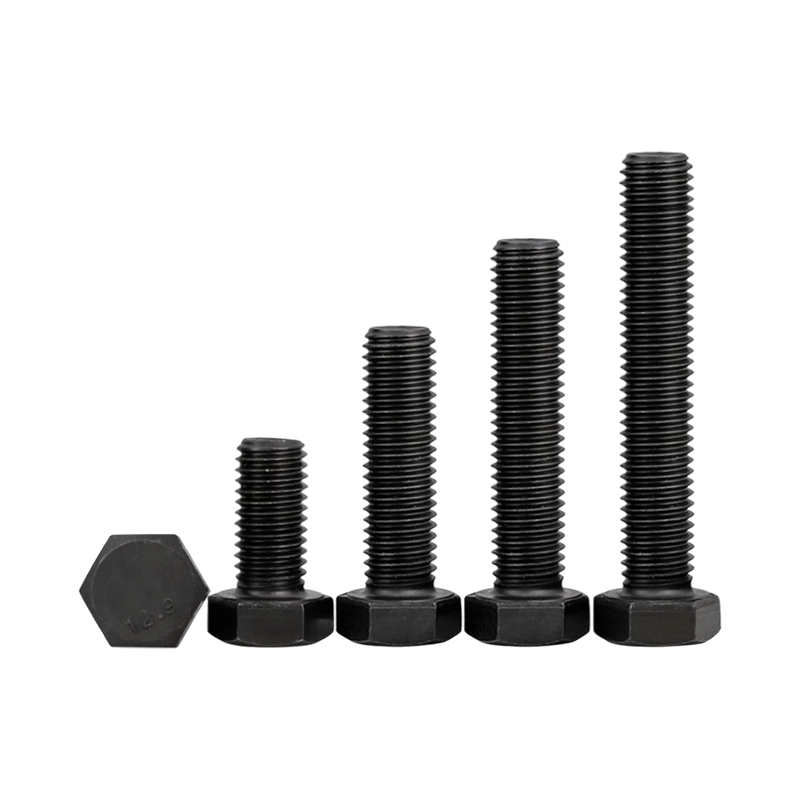 DIN 933 Full-Thread and DIN 931 Partial-Thread Hex BoltsThis listing covers hex bolts in full-thread and partial-thread variants, with standardized property classes. Check here when confirming bolt grade markings before applying torque values from charts.View Product →
Grade marking matters. Bolts without a visible property class mark, or batches from suppliers who cannot document the grade, should not be torqued using a chart that assumes a known class. Identify and replace them first.
Also confirm the nominal diameter and thread pitch before reading any table. A screw size chart shows how easily major diameter, gauge numbers, and pitch get confused, and an error here changes both the torque value and the preload.
The K-Factor: Why the Same Bolt Needs Different Torque Settings
The K-factor, also called the nut factor, is the friction coefficient that ties applied torque to bolt tension, and it can change the required torque setting by more than 50 percent depending on plating, coating, and lubrication.
A plain steel bolt runs near K = 0.20. Zinc plating lifts it slightly, hot-dip galvanizing pushes it to 0.25 or higher, and waxes or molybdenum disulfide coatings pull it below 0.15. Every surface treatment changes how much of the wrench effort survives the trip through the threads.
| Surface condition | Typical K value |
| Plain steel, as received | 0.18 to 0.22 |
| Zinc plated | 0.20 to 0.24 |
| Cadmium plated | 0.15 to 0.16 |
| Hot-dip galvanized | 0.25 to 0.30 |
| Molybdenum disulfide coated | 0.12 to 0.14 |
| Waxed or paraffin coated | 0.10 to 0.12 |
K-factor by surface condition
Bars show typical K ranges; longer bar means more friction and higher required torque for the same preload.
The practical consequence shows up in an M12 grade 8.8 joint. At K = 0.20 the correct setting is about 90 Nm for 75 percent of proof load. With molybdenum coated threads at K = 0.13, the same preload needs about 59 Nm. If an operator keeps applying 90 Nm to the coated fastener, the bolt receives roughly 50 percent more preload than designed and comes dangerously close to yield.
Hot-dip galvanized fasteners can require 25 to 40 percent more torque than waxed fasteners of the same size and class to reach the same preload.
The nut is the dominant friction partner in any bolted connection, absorbing roughly half of the applied torque under its bearing face. Hexagon nuts manufactured to DIN 934 or GB/T 6170 have standardized bearing areas and thread tolerances that keep this friction predictable across batches.
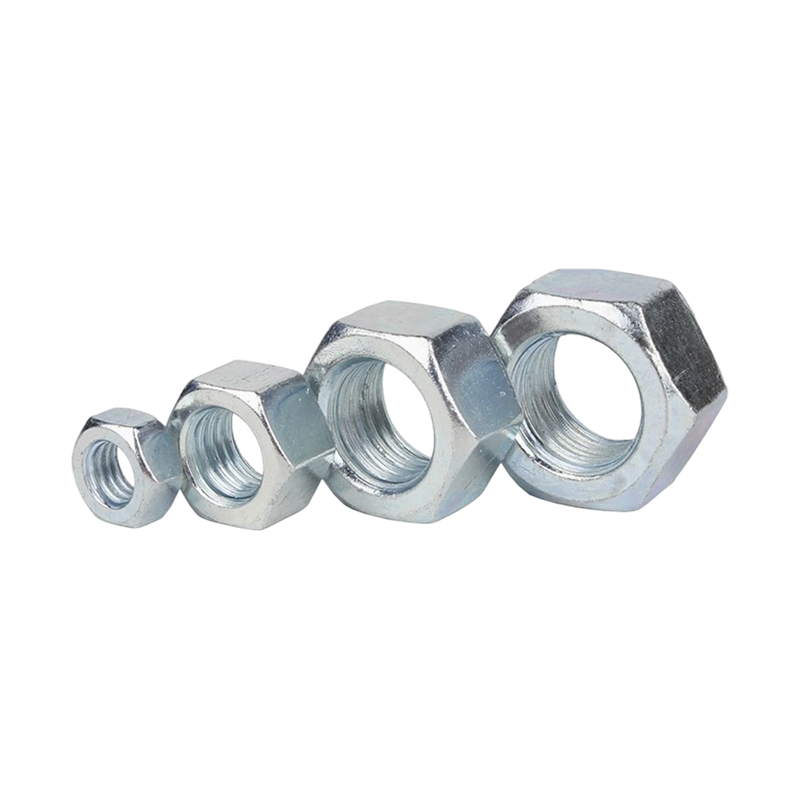 DIN 934 / GB 6170 Hexagon NutsThese hex nuts offer standardized bearing areas and thread tolerances that make joint friction predictable. Pairing them with compatible bolts helps maintain consistent torque-preload behavior across batches.View Product →
Dry assembly
- K value: 0.20
- M12 8.8 setting: about 90 Nm
- Preload target: 75 percent of proof
- Main risk: under-tension and loosening
Lubricated assembly
- K value: 0.13
- M12 8.8 setting: about 59 Nm
- Preload target: 75 percent of proof
- Main risk: over-tension and yield
Torque Settings in Practice: Tools, Sequence, and Limits
A correct torque value only produces a correct joint when the tool delivers the value accurately, the tightening sequence spreads the load evenly, and the fastener is still elastic.
Calibrate the wrench and trust the certificate
Click-type torque wrenches rated to plus or minus 4 percent handle most general assembly. Hydraulic multipliers and electronic torque wrenches hold plus or minus 2 percent for structural fastening. Calibration drifts with use, so verify the tool on the manufacturer's schedule and after any drop.
Tighten in a cross pattern, in two passes
A flange tightened clockwise bolt by bolt loads the early bolts more than the last ones, because each new bolt compresses the joint and relieves its neighbours. Work a star or cross pattern in 50 percent steps first, then a second pass at full torque. The same rule applies to wheel bolts, flange covers, and structural base plates.
Know where torque charts stop applying
Standard torque settings hold while the bolt stays elastic. Torque-to-yield applications, common in automotive cylinder head bolts and high-strength structural joints, deliberately pull the fastener past yield and control preload by rotation angle. Never reuse these bolts after removal: the old torque setting now over-stretches the fastener, because a yielded bolt reaches the same reading at a much higher preload.
For structural anchors set in concrete, torque settings are installation limits, not suggestions. A wedge anchor needs enough torque to expand and grip the hole wall, but excessive torque can crack the concrete and destroy the anchor's holding capacity. Follow the anchor supplier's published setting exactly.
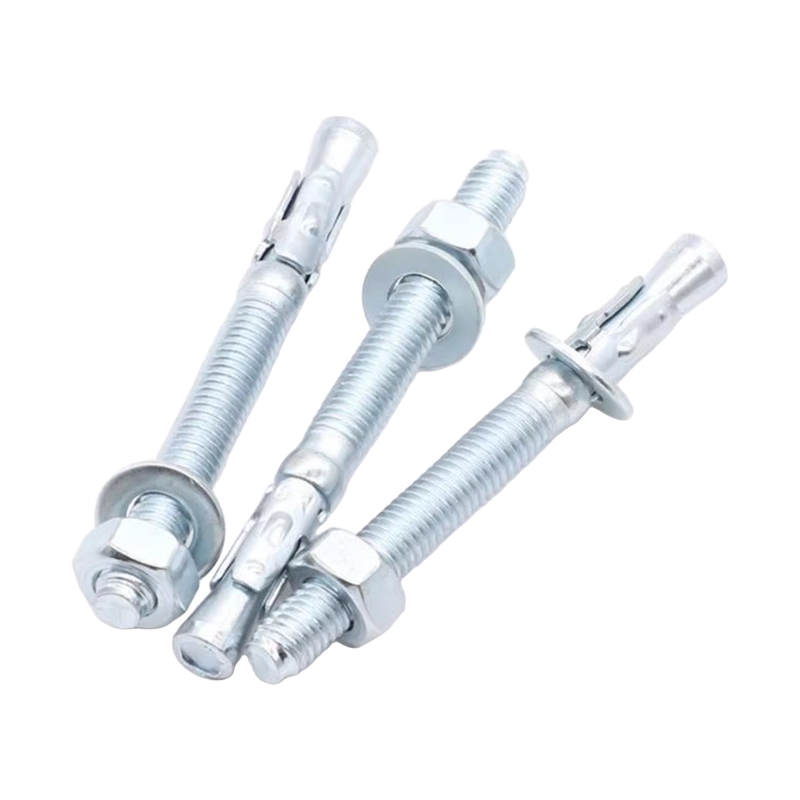 Wedge Anchor for Concrete and Structural InstallationsAn expansion anchor for concrete that grips the drill hole wall when the nut is tightened. It is relevant here because its torque setting serves as an installation limit to avoid cracking the base material.View Product →
Consistent fasteners make consistent torque settings work. When plating thickness, lubricant residue, or thread fit varies between batches, the friction in the joint varies too, and one fixed torque value produces different preloads on different days. Sourcing from a specialist fastener manufacturer such as Wuxi Sharp Metal Products Co., Ltd., which controls these variables across production batches, removes a whole class of field failures.
Common Mistakes That Shift Effective Torque Settings
Field failures rarely come from one dramatic error. They come from a pattern of small mismatches between the torque chart's assumptions and the real fasteners being tightened.
- Applying a torque setting from a different property class, for example 8.8 values on 10.9 bolts
- Torquing dry threads with values calculated for lubricated threads, or the reverse
- Changing the bearing surface with thick washers, gaskets, or soft coatings without recalculating K
- Reusing fasteners that have already yielded, especially torque-to-yield bolts
- Tightening over rust, dirt, burrs, or damaged threads
- Using a single torque setting for mixed batches of unmarked bolts
Any one of these can move the real preload 30 to 60 percent away from the design value, which turns a safe joint into a fatigue failure waiting for a load cycle.
Rule of thumb: if the property class mark is not readable on the bolt head, do not calculate a torque setting for it. Replace the fasteners before you torque them.
Torque Settings for Bolts: Frequently Asked Questions
What torque should I use for an M8 grade 8.8 bolt?
For an M8 grade 8.8 bolt with lightly oiled threads and K = 0.20, the typical torque setting is about 26 Nm, which tensions the bolt to roughly 75 percent of proof load. Reduce the value by 25 to 30 percent when threads are well lubricated.
Does lubrication increase or decrease the required torque?
Lubrication decreases the required torque. Oil and grease films lower both thread friction and nut bearing friction, so less wrench effort produces the same preload. If you change a joint's lubrication state, recalculate the torque setting with the new K value instead of keeping the dry number.
Why do published torque values differ between charts?
Charts differ because their assumptions differ. Some tension bolts to 70 percent of proof load, others to 85 percent. Some assume dry threads, others lightly oiled. Some use a K value of 0.18, others 0.21. Read the assumptions printed with a chart and choose the table whose conditions match your assembly.
Do torque settings apply the same way to stainless steel bolts?
No. Stainless steel fasteners gall easily under high contact pressure, which raises thread friction and makes the effective K value unstable. Use torque values published specifically for stainless fasteners, apply a stainless-compatible thread lubricant, and keep tightening speed low to limit heat.