 +86-15052135118


 Español

 Get In Touch


A coupling nut backed off on a conveyor drive after 240 running hours, showing two full threads of play at the coupling flange. The joint carried a standard hex nut, no thread-locking compound, and no lock nut. That path - vibration rotating the nut loose until preload disappears - is one of the most common failure sequences in industrial machinery, and a lock nut is the direct answer to it.
This guide defines lock nuts, explains the two locking mechanisms behind them, compares the types that cover most engineering applications, and walks through selection and installation so a bolted joint stays tight. It is written for design engineers, maintenance teams, and purchasing staff who need practical specification guidance.
At Wuxi Sharp Metal Products Co., Ltd., we manufacture hexagon bolts, hex nuts, and washers with an in-stock inventory above 800 tons, so lock nut selection against real operating conditions is part of our daily work.
Content
What Is a Lock Nut and Why Does It Matter?
A lock nut is a nut that resists loosening under dynamic loads such as vibration, impact, thermal cycling, and torque reversal. It is internally threaded like a standard hex nut, but it adds a locking feature: a polymer insert, a deformed thread zone, serrations on the bearing face, or a thread-tension arrangement that stops the nut from rotating back off the bolt.
A lock nut is a fastener component designed to maintain clamp load in a bolted joint exposed to vibration, shock, or fluctuating forces. The locking action comes from friction, thread deformation, or a positive mechanical lock.
Why does this matter in practice? In rotating equipment, a standard nut can shed most of its clamp load within a few hundred vibration cycles. The accepted way to measure this is the Junker transverse vibration test described in DIN 25201-4, which moves the joint sideways while it stays under preload. The nut that keeps more clamp load for more cycles is the one that stays tight in service.
How Does a Lock Nut Work?
Lock nuts work through one of two mechanisms: prevailing torque, where the nut resists rotation at every position along the thread, or free-spinning locking, where the nut turns easily until seated and then creates high tension or a positive lock.
A nylon collar or an out-of-round thread zone creates friction the moment the nut meets the bolt. The nut cannot coast down the thread; it must fight that friction constantly, which is why these nuts hold position even when the joint is lightly clamped.
A serrated flange bites into the bearing surface when the nut seats, a jam-nut pair flexes the thread flanks, and a castle nut with a pin blocks rotation completely. The nut installs quickly, then locks only at the fully tight position.
The defining parameter is prevailing torque: the torque needed to turn the nut along the thread before it seats against the workpiece, measured in newton-meters. It is the value that wears out with reuse.
Common Lock Nut Types and Typical Uses
Five lock nut types cover most industrial applications: nylon insert, all-metal distorted, serrated flange, jam nut, and castle nut with pin.
| Type | Locking mechanism | Reuse | Temperature limit | Typical application |
| Nylon insert | Polymer collar deforms over the thread | 10-15 times | 121 °C (nylon) | Machinery, compressors, fans |
| All-metal distorted | Upper thread zone pressed out of round | 5-10 times | Up to 400 °C | Exhaust, engines, high-heat joints |
| Serrated flange | Flange teeth bite into the bearing surface | Limited, one-use in critical joints | Material dependent | Sheet-metal and softer base materials |
| Jam nut | Two thin nuts tightened against each other | Unlimited in principle | Same as base material | Adjustable positions, thin envelopes |
| Castle nut with pin | Cotter pin locks nut to bolt cross-hole | High, new pin recommended | Same as base material | Wheel hubs, safety-critical joints |
Do not use a nylon-insert nut above 121 °C, in aggressive chemical washdown areas, or where high-speed spin-down deforms the polymer. All-metal distorted nuts are the standard answer for high-heat joints, and castle nuts with a pin are the standard answer when rotation is unacceptable.
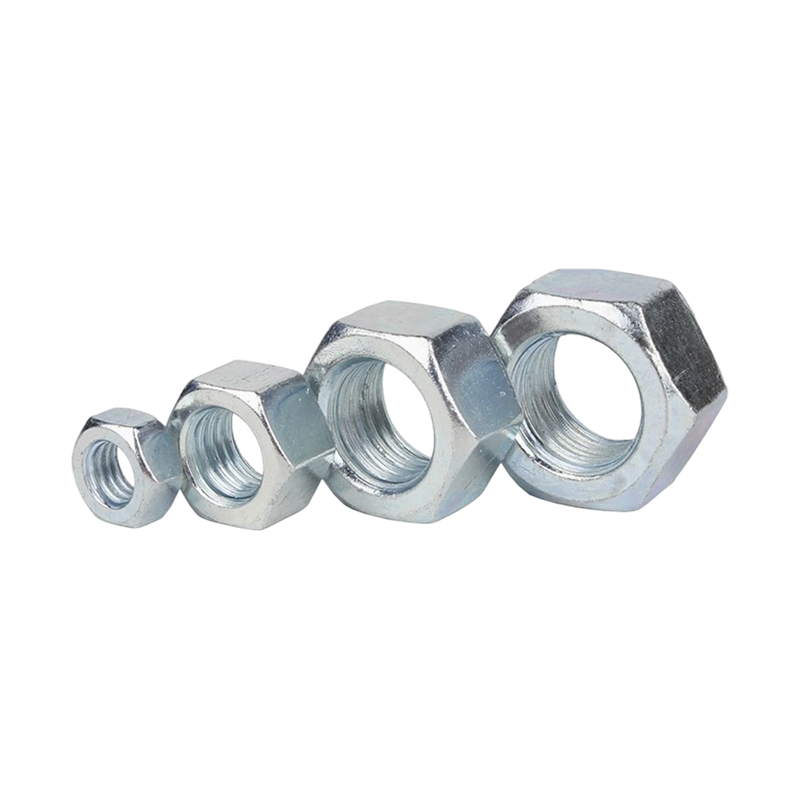 Hexagon Nut DIN934/GB6170 for Standard FasteningA standard hexagon nut suited for general mechanical assembly and structural connections. It pairs with DIN933 or DIN931 bolts, but for high-heat or vibration-prone joints, consider a locking alternative as discussed above.View Product →
Signs that a lock nut has reached end of life:
- Visible cracking, flattening, or melting of the nylon collar
- The nut spins freely along the thread with no resistance at the locking zone
- Serration marks are fully flattened on a flange nut
- The deformed section of an all-metal nut no longer grips the bolt thread
How to Select a Lock Nut for Your Joint
Select a lock nut by matching temperature rating, reuse requirement, and thread compatibility to the operating conditions, not by unit price. The cheapest type becomes expensive when it fails and stops a production line.
- Define the operating temperature range at the nut location, not at the ambient air temperature.
- Count how often the joint is opened during maintenance; this sets the reuse requirement.
- Check bolt length and thread protrusion; the locking zone needs full thread engagement.
- Match nut material and coating to the bolt, using zinc-plated carbon steel for indoor machinery and stainless steel for corrosive exposure.
- Assess vibration direction; transverse movement loosens nuts fastest and is the case where lock nuts matter most.
- Classify the joint by safety consequence; use castle nuts with pins when rotation is unacceptable.
For indoor machinery, the default pairing is a zinc-plated carbon steel bolt and nut. Our guide to carbon steel fastener grades and coatings explains how grade and plating change torque behavior and corrosion resistance.
For light-duty joints where cost matters more than reliability, a spring washer is the classic alternative, but it delivers a fraction of the clamping security of a lock nut under real vibration.
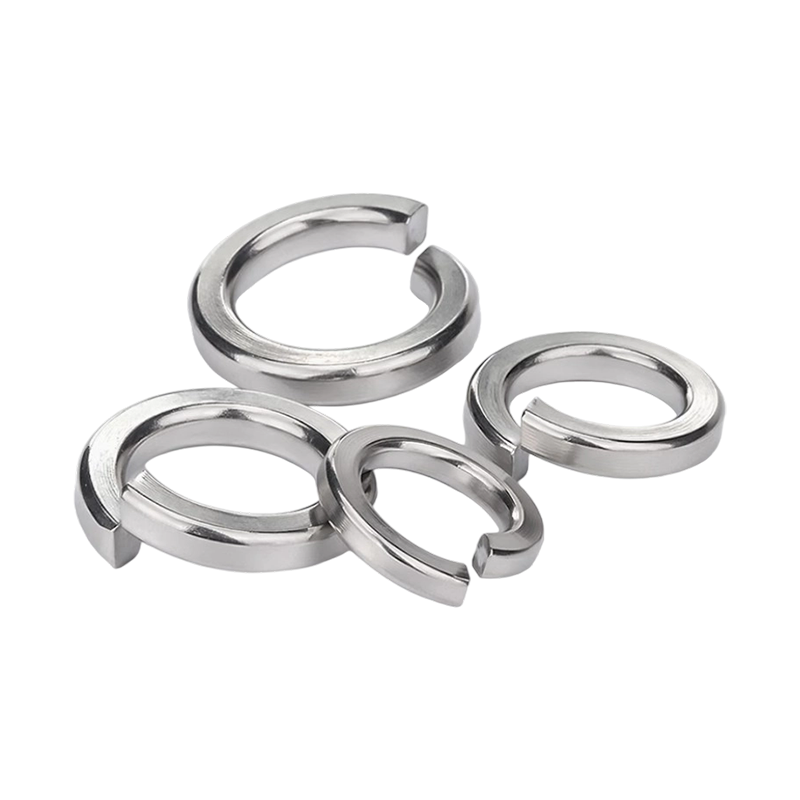 Spring Washer DIN127 for Vibration ResistanceA classic low-cost option to prevent loosening from vibration. It provides less clamping security than a lock nut, making it suitable for light-duty joints where cost matters more than maximum reliability.View Product →
Installation Rules That Prevent Loosening in Service
Installation quality affects lock nut performance as much as the nut itself. Clean threads, full seating, and correct torque are non-negotiable for every lock nut type.
- Inspect the bolt thread and the nut thread before assembly; remove dirt, burrs, and old thread-locking residue that can alter the torque reading.
- Lubricate only where the lock nut design allows it. Keep a nylon insert dry, and apply a light oil to all-metal distorted nuts to prevent galling at the deformed threads.
- Run the nut down until it seats fully against the joint surface, then verify that the locking zone is completely engaged on the bolt thread.
- Apply the torque specified for the bolt class. Higher torque cannot compensate for the wrong nut type, and under-torque leaves the locking mechanism partially engaged.
- Mark the finished position with a torque stripe, and record the torque value in the maintenance log for inspection during service.
If the bolt hole is oversized or the bearing surface is cast, painted, or soft, place a flat washer under the nut. Without it, the nut digs into the workpiece, preload readings become unreliable, and the locking zone loses its seat.
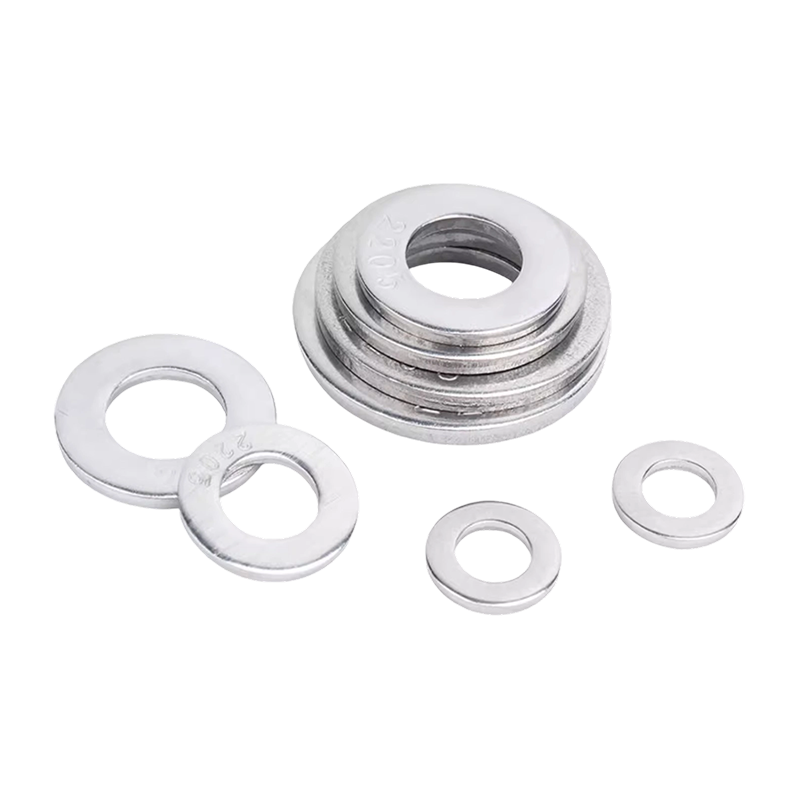 Flat Washer DIN125/GB97.1 for Load DistributionA flat washer that spreads load and protects the workpiece when bolt holes are oversized or surfaces are cast, painted, or soft. It ensures reliable preload and stable seating under the nut.View Product →
After removal, check the prevailing torque before reinstalling any lock nut. If it spins freely, replace it. In safety-critical joints, replace nylon-insert and all-metal lock nuts on every service event.
Frequently Asked Questions
Can a lock nut be reused?
Yes, but the reuse limit depends on the type. Nylon-insert nuts are commonly reused 10 to 15 times before prevailing torque drops below specification. All-metal distorted nuts last roughly 5 to 10 cycles. Serrated flange nuts and castle nut pins are treated as one-use components in safety-critical joints.
When should I use a lock nut instead of a standard nut?
Use a lock nut when the joint is exposed to vibration, shock, thermal cycling, or torque reversal. Use a standard hex nut in static, low-load joints where dynamic movement is not a risk and where frequent disassembly matters more than loosening resistance.
Do lock nuts need a lock washer?
No. A lock nut is a self-contained locking device. Adding a lock washer under a lock nut reduces the seating area and can produce a false torque reading. Use a flat washer only to protect a soft or damaged bearing surface.
What is the difference between a lock nut and a jam nut?
A lock nut is the broader category of nuts that resist loosening. A jam nut is a specific thin nut used in pairs: two jam nuts tightened against each other create thread tension that resists rotation. Jam nuts are reusable, low-cost, and useful where height is limited, but they need careful setup and do not suit every joint.
A lock nut is a targeted solution for dynamic joints, not a universal upgrade. Match the locking mechanism to the temperature, reuse, and vibration conditions of the joint, install it with clean threads and correct torque, and it will hold clamp load far longer than a standard nut. Use the joint conditions first, then the catalog, and the right lock nut becomes a straightforward engineering choice.