 +86-15052135118


 Español

 Get In Touch


An M8 bolted joint on a packaging line loses torque after 30 hours of vibration. The split lock washer is still there, but it has flattened completely. A second joint assembled with a nylon-insert lock nut holds its torque reading through the same cycle. That difference is why the lock washer vs lock nut decision keeps coming up in maintenance, design, and procurement. Wuxi Sharp Metal Products Co., Ltd., a fastener manufacturer with more than three decades of production experience, sees the same trade-off in orders for DIN 127 spring washers and DIN 934 hexagon nuts. The short answer is that under dynamic loading, a lock nut is the more reliable choice, while a lock washer works best in compact, low-cost, low-vibration joints.
This guide compares both methods using practical criteria: vibration resistance, reusability, temperature limits, installation height, and total applied cost. It also looks at the question from a fastener manufacturing factory perspective, where these products are made and tested in volume.
Content
How Lock Washers Work: Spring Tension and Friction
A lock washer is a spring element that adds tension and friction to a bolted joint, but it does not prevent rotation in the same way a prevailing torque nut does. The split lock washer, commonly made to DIN 127, compresses when the nut is tightened and pushes the nut and the bearing surface apart. That push raises thread friction and makes the nut harder to rotate.
The practical benefit is real but limited. Once the split ring is fully compressed, it behaves like a flat ring. Under transverse vibration, the joint can lose this compression quickly. In a Junker-style vibration test, many split lock washers lose seating load within seconds of the vibrating table starting. That is why some equipment manufacturers no longer allow a split lock washer alone in safety-critical joints.
- Split lock washer: low cost, compact, but stops working once flattened.
- External tooth washer: bites into soft materials, gives better grip than a split ring, but can damage painted surfaces.
- Internal tooth washer: less visible on a screw head, useful for small fastener sizes, but has limited load capacity.
How Lock Nuts Work: Prevailing Torque and Controlled Deformation
A lock nut resists loosening by creating prevailing torque on the threads, independent of the clamp load in the joint. A nylon-insert lock nut has a polymer ring that squeezes the thread and absorbs vibration. An all-metal lock nut deforms a portion of its thread to create a consistent drag that stays engaged until the nut is removed.
This thread-based approach gives lock nuts a clear advantage in dynamic assemblies. The nut can still resist unscrewing forces even if the joint loses some initial clamp load. Nylon insert types are generally rated between -40 and 120 degrees C, while all-metal prevailing torque nuts handle 250 degrees C or higher, depending on the metal and finish.
- Nylon insert lock nut: best for moderate temperature, frequent disassembly, and vibration.
- All-metal distorted lock nut: best for high temperature, heavy vibration, and repeated reuse.
- Jam nut pair: two thin nuts tightened against each other, simple and reusable, but adds axial length.
Lock Washer vs Lock Nut: Side-by-Side Comparison
When you compare lock washer vs lock nut on engineering data, the lock nut wins on vibration resistance, reusability, and predictable torque control. The lock washer wins on installation height, weight, and unit cost. The table below summarizes the factors that matter most in industrial fastening.
| Factor | Lock Washer | Lock Nut |
| Working principle | Spring force and friction under the head or nut | Prevailing torque on the thread |
| Vibration resistance | Low to moderate | High |
| Reusability | Limited, can flatten permanently | Nylon insert limited, all-metal reusable |
| Temperature range | Wide | Nylon insert to 120 C, all-metal to 250 C or higher |
| Installation height | Low | Higher |
| Typical cost | Lower | Higher |
When to Use Lock Washers vs Lock Nuts
Use lock washers where space constraints dominate, the joint is static, and the fastener will be replaced during maintenance. Use lock nuts where the joint carries cyclic, shock, or side loads. The two lists below reflect common purchasing decisions in industrial fasteners.
Choose a lock washer when
- Axial clearance is short and a taller nut will not fit.
- The assembly is lightly loaded and not exposed to strong vibration.
- The bearing surface is soft enough for a serrated washer to bite.
- You need a low-cost solution for a temporary or non-critical joint.
Choose a lock nut when
- Machinery generates vibration, impact, or frequent stop-start cycles.
- The joint is safety-related, such as a guard, brake, hoist, or drive shaft.
- Temperature cycles can reduce clamp load and need stable thread friction.
- You expect regular service and want predictable torque readings.
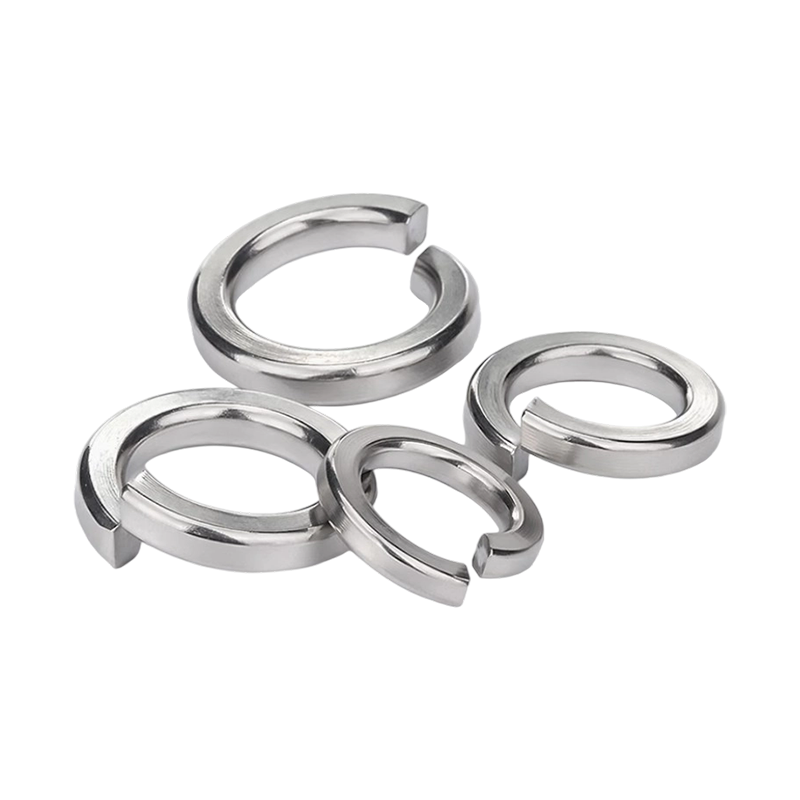 DIN 127 Spring Washers from Wuxi Sharp Metal ProductsListed for applications with static joints and space constraints, these lock washers are available in multiple sizes and finishes. They suit maintenance scenarios where fasteners are replaced.View Product →
For applications that stay with lock washers, Wuxi Sharp Metal Products supplies DIN 127 spring washers in several sizes and finishes. For teams shifting to thread-based locking, the company also produces standard hexagon nuts that can be used as the base for nylon patch locking or all-metal prevailing torque designs.
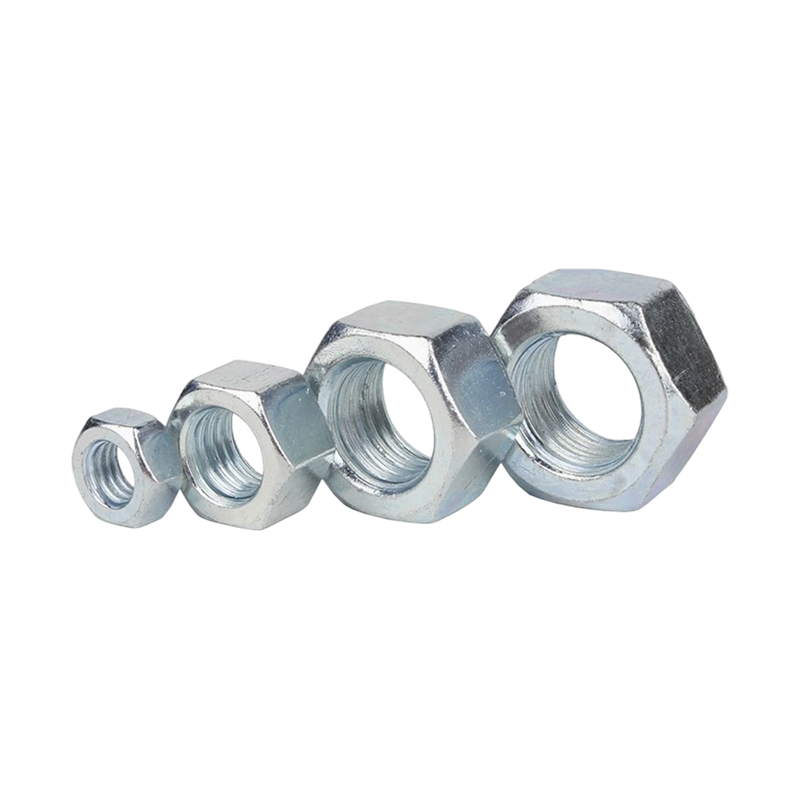 Hexagon Nuts DIN 934 / GB6170 for Thread-Based LockingStandard hex nuts that can serve as a base for nylon patch or all-metal prevailing torque designs. They are shown as an alternative to lock washers for joints under cyclic or side loads.View Product →
Data Snapshot: Vibration Loosening Resistance
Junker transverse vibration testing is a standard way to compare locking methods. The chart below shows a relative anti-loosening index, not a torque value. Prevailing torque lock nuts outperform lock washers under the same vibration profile.
Frequently Asked Questions
Do lock washers really work?
Yes, in limited conditions. They add spring tension and friction and can stop rotation in lightly loaded static joints. Under transverse vibration, they lose effectiveness because the washer flattens and stops generating spring force. A lock nut is the stronger choice when vibration is present.
Can you use a lock washer with a lock nut?
You can, but it is rarely needed and may make torque readings less consistent. Prevailing torque lock nuts already create thread friction. Adding a lock washer increases height and cost without improving the locking effect in most applications.
Is a flat washer better than a lock washer?
A flat washer is better for load distribution and surface protection, but it does not prevent loosening. In practice, a flat washer plus a lock nut gives better vibration resistance than a split lock washer by itself. Do not use a flat washer alone when the joint is exposed to vibration.
What is the strongest lock nut for heavy vibration?
An all-metal prevailing torque lock nut is the strongest option for heavy vibration and high temperature. It holds its drag torque through more reuse cycles than a nylon insert type. For moderate temperatures, a nylon insert lock nut is acceptable and usually less expensive.