 +86-15052135118

 Español
 Get In Touch


Content
Drywall Screws vs. Wood Screws: The Core Differences
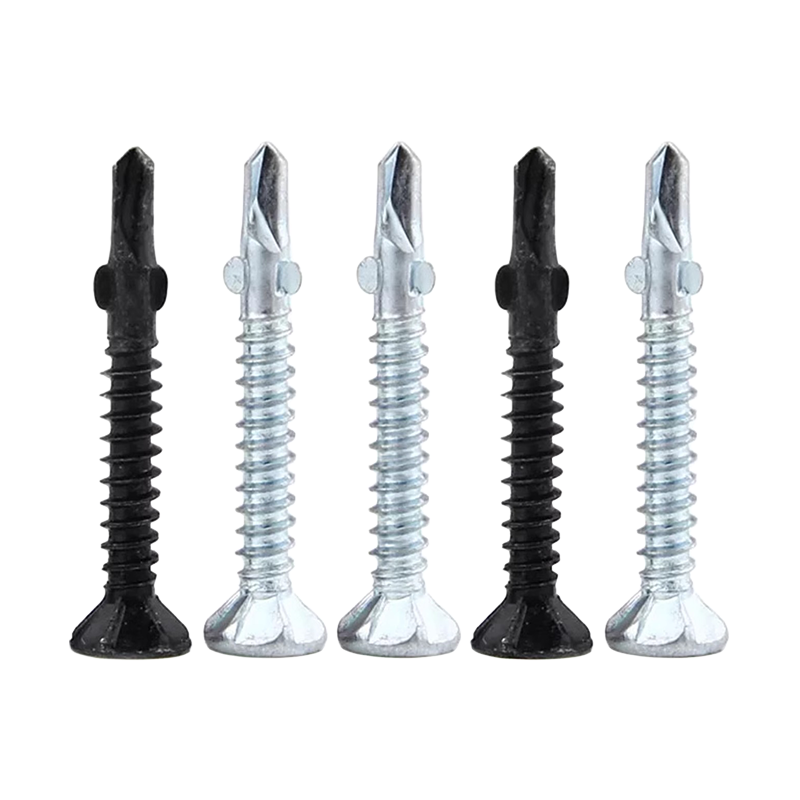
Drywall screws and wood screws look similar at a glance — both are threaded, both are pointed, and both are driven with a power screwdriver. In practice, they are engineered for fundamentally different jobs, and using one in place of the other produces predictably poor results. The differences come down to steel hardness, thread geometry, head design, and point type — each of which is optimized for a specific substrate and load condition.
Steel and Hardness
Drywall screws are made from hardened, case-hardened steel specifically selected to penetrate gypsum board and light-gauge steel framing without pre-drilling. This hardness, however, comes at the cost of brittleness. A drywall screw has very little shear strength — it snaps cleanly rather than bending when subjected to lateral load. Wood screws, particularly coarse-thread construction screws, are made from softer, tougher steel that deforms before fracturing, giving them meaningful shear resistance. In structural wood connections — decking, framing, ledger boards — shear load is always present, which is why drywall screws are explicitly excluded from structural applications by building codes in most jurisdictions.
Thread Geometry
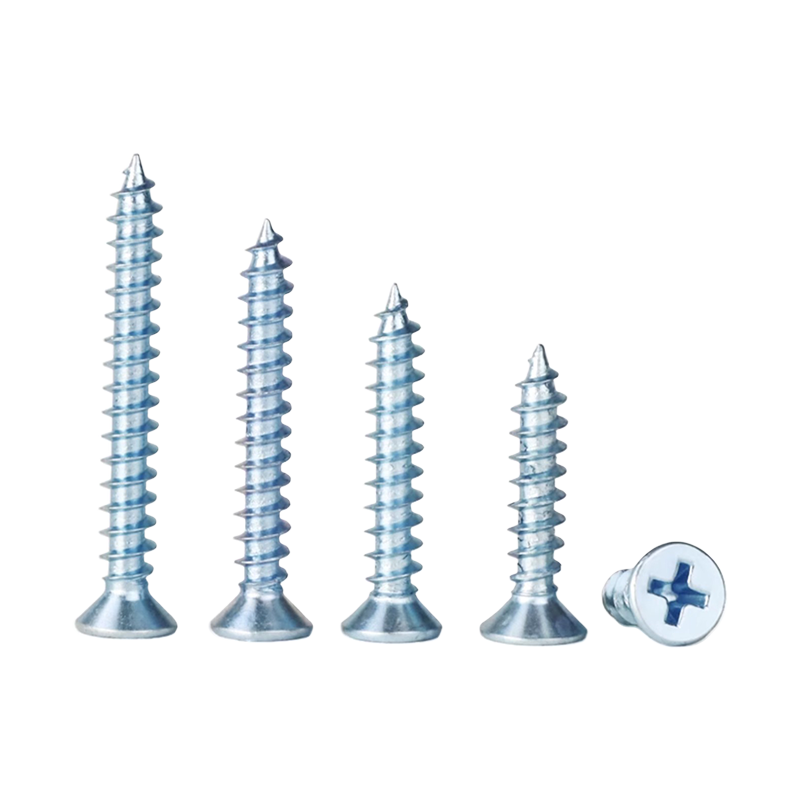
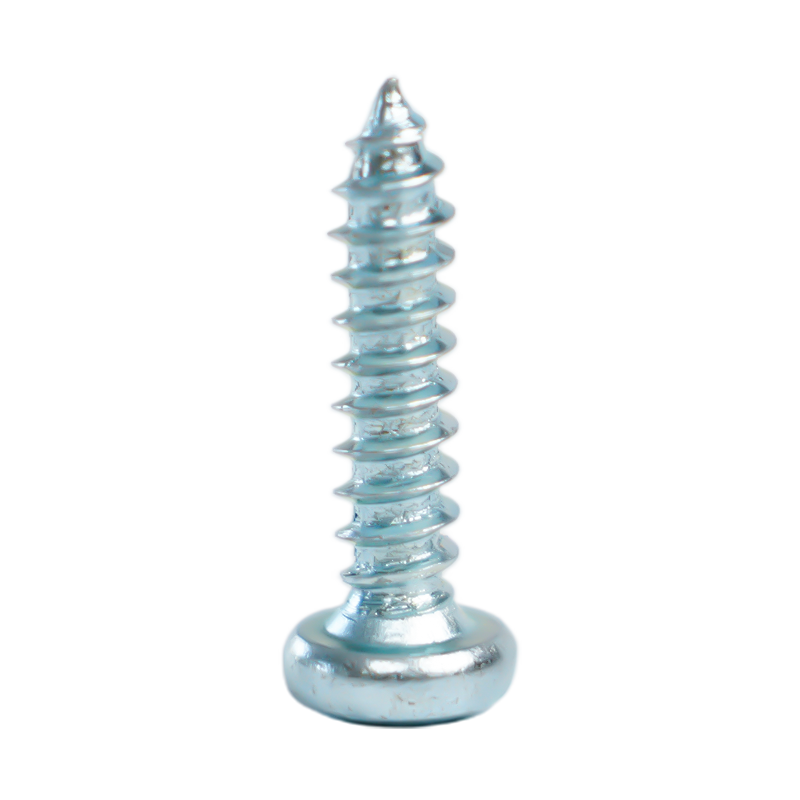
Drywall screws have a fine, sharp thread with a high thread count per inch. This geometry cuts cleanly through gypsum and pulls the board tight against the framing quickly, but it provides limited withdrawal resistance in solid wood because the narrow thread depth leaves little wood fiber engaged. Wood screws have a coarser, deeper thread that removes wood chips rather than compressing them, creating a larger thread-to-fiber engagement area and significantly higher pull-out resistance in lumber and engineered wood products. Coarse-thread drywall screws exist for wood stud applications, but even these lack the structural ratings of dedicated wood screws.
Head Design and Drive Type
Drywall screws have a bugle head — a smooth, concave underside that flares outward from the shank without a sharp shoulder. This profile allows the head to dimple slightly into the drywall face paper without tearing it, leaving a recess that can be filled flush with joint compound. Wood screws use a flat countersunk head with a distinct shoulder angle, a pan head that sits proud of the surface, or a hex head for structural applications. Drive recesses on drywall screws are almost universally Phillips or square, while structural wood screws increasingly use Torx (star) drive to reduce cam-out during high-torque driving.
| Attribute | Drywall Screw | Wood Screw |
|---|---|---|
| Steel type | Hardened, brittle | Tough, ductile |
| Shear strength | Poor | Good to excellent |
| Thread type | Fine, sharp | Coarse, deep |
| Head profile | Bugle (no shoulder) | Flat, pan, or hex |
| Corrosion resistance | Black phosphate (indoor only) | Zinc, ceramic, or stainless options |
| Structural use | Not permitted | Yes, with rated fasteners |
The practical rule is straightforward: use drywall screws only for hanging drywall. For every other wood-to-wood, wood-to-metal, or structural connection, a purpose-made wood or construction screw is the correct fastener. Drywall screws used in subfloor, decking, or framing applications are a documented cause of structural callbacks and fastener failures in residential construction.
What Is a Countersunk Screw?
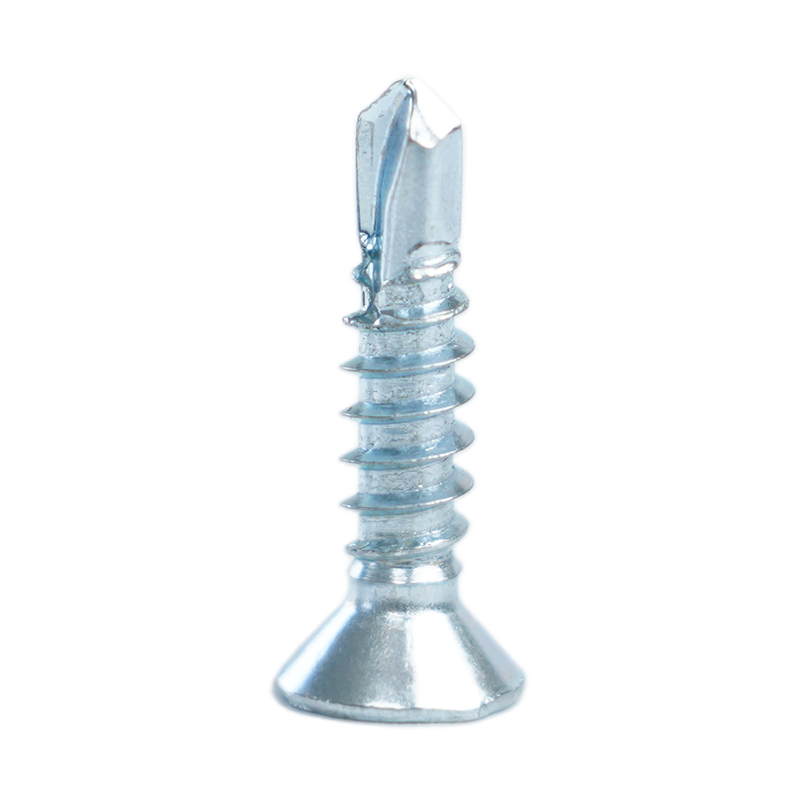
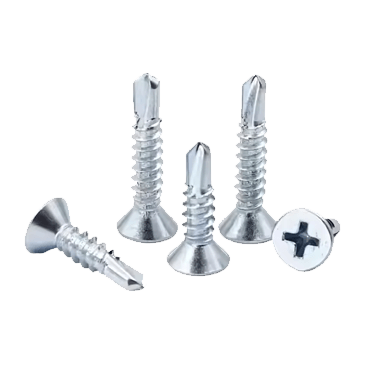
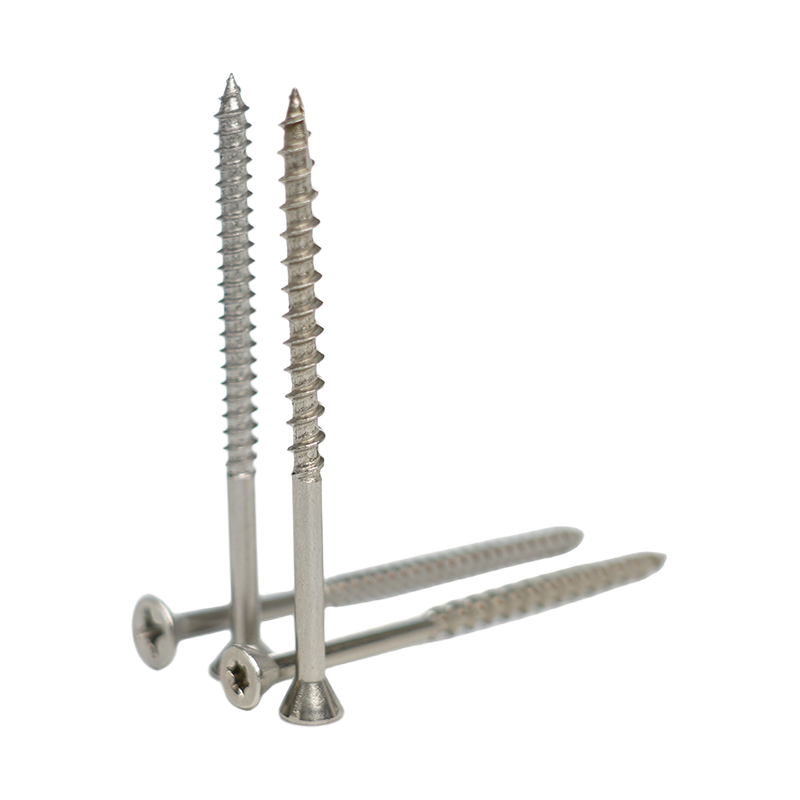
A countersunk screw is a screw whose head is designed to sit flush with — or below — the surface of the material it is driven into, rather than standing proud above it. The head has a conical underside, typically at an 82° or 90° included angle, that mates with a matching tapered recess (a countersink) either pre-drilled into the material or self-formed by the screw's driving action in softer substrates. When driven fully, the screw head is flush with or recessed below the surface, leaving no protruding hardware that could snag, interfere with mating surfaces, or require a separate cover cap.
The term "countersunk" describes both the screw head geometry and the preparatory operation. Countersinking as a machining operation means using a countersink bit — a cone-shaped cutting tool — to enlarge the mouth of a clearance hole to the correct angle and diameter to receive a flat-head screw flush. In hardwood joinery, metal fabrication, and precision assembly work, this step is always performed before driving the fastener. In softwood and drywall applications, flat-head screws often self-countersink as they are driven, compressing the fibers of the substrate around the head.
Common Applications for Countersunk Screws
- Cabinetry and furniture: Flush fastening is essential where surfaces will be finished, painted, or face-bonded. A protruding screw head under a veneer or laminate creates a visible telegraph point.
- Decking and flooring: Countersunk deck screws sit below the board surface, allowing the hole to be filled with a wood plug or left as a small dimple that sheds water rather than pooling it around a raised head.
- Metal fabrication and sheet metal: Machine screws and bolts with flat countersunk heads are used wherever flush external surfaces are required — aircraft panels, electronic enclosures, automotive trim, and structural connections where protruding heads would interfere with assembly.
- Hinge and hardware installation: Most door hinges, drawer slides, and cabinet hardware use countersunk mounting holes so the screw heads do not prevent the hardware from sitting flat against the mounting surface.
When a countersunk screw is driven deeper than flush — intentionally recessing the head below the surface — the resulting hole can be filled with a wood plug, bung, or filler to conceal the fastener entirely. This technique, common in boat building, fine furniture, and exterior timber construction, produces a clean surface with no visible hardware while retaining the full holding strength of the fastener beneath.
Lag Screw vs. Carriage Bolt: Choosing the Right Heavy-Duty Fastener
Lag screws and carriage bolts are both heavy-duty fasteners used in structural wood connections — deck ledger boards, post bases, beam-to-beam connections, and similar applications where significant loads must be transferred between members. They are not interchangeable, and selecting the wrong one for a given connection type affects both structural performance and code compliance.
Lag Screws (Lag Bolts)
A lag screw — commonly called a lag bolt despite technically being a screw — has a coarse, wood-cutting thread on its lower portion and a smooth shank near the head. The head is always a hex or square drive, turned with a wrench or impact driver rather than a screwdriver. Lag screws are driven into a pre-drilled pilot hole; no nut is used on the back side. The fastener derives its holding strength entirely from thread engagement with the wood fibers in the receiving member. This makes lag screws the appropriate choice when access to the back face of the connection is impossible or impractical — fastening a ledger board to a house rim joist, for example, where the interior of the house is on the other side.
Lag screw withdrawal strength — resistance to being pulled straight out along the screw axis — depends on thread length, diameter, and the specific gravity of the wood species. In Douglas fir, a 1/2-inch diameter lag screw with 3 inches of thread engagement provides approximately 1,200–1,500 lbs of withdrawal resistance, per NDS (National Design Specification) published values. Shear strength, which governs connections where members slide laterally relative to each other, depends on screw diameter and the shear plane geometry.
Carriage Bolts
A carriage bolt passes completely through both members being connected and is secured with a washer and nut on the back face. Its defining feature is a domed, smooth head with a square neck directly beneath it. When driven into a pre-drilled hole, the square neck embeds into the wood, preventing the bolt from rotating as the nut is tightened from the back — allowing one-person installation without holding the bolt head. Because the fastener passes through both members and is clamped mechanically, carriage bolt connections are typically stronger in both shear and tension than lag screw connections of equivalent diameter, and their clamping action distributes load across a washer bearing area rather than concentrating it at thread engagement points.
Carriage bolts are the standard fastener for post-to-beam connections, double-beam built-up members, and any through-bolted connection where back-face access is available. Their limitation is exactly that requirement: both faces of the connection must be accessible for installation, and the bolt must be long enough to pass through the full combined thickness of the members plus washer and nut.
Which to Use and When
- Use lag screws when only one face of the connection is accessible, when drilling completely through the structural member is not desirable, or when the receiving member is a masonry or steel substrate with a lag shield or self-tapping thread insert.
- Use carriage bolts when both faces are accessible, maximum connection strength is required, the engineer of record specifies through-bolted connections, or the connection must be designed to be disassembled and reassembled — as in temporary structures or removable deck sections.
- Corrosion protection matters for both: Exterior structural connections require hot-dip galvanized (HDG) or stainless steel fasteners. Standard zinc electroplated lag screws and carriage bolts are not adequate for ground-contact, pressure-treated lumber, or coastal environments where ACQ or copper-based preservative treatments accelerate corrosion of under-specified hardware.
When a structural connection is subject to an engineering review or building permit inspection, always confirm the fastener specification in the approved drawings before substituting one fastener type for the other. IRC and IBC prescriptive tables specify fastener type, diameter, length, and spacing for common connections including deck ledgers and post bases — lag screws and carriage bolts are not listed interchangeably in these tables.
Practical Fastener Selection: Putting It All Together
The four fastener topics covered in this article — drywall screws versus wood screws, countersunk screws, and lag screws versus carriage bolts — each represent a distinct tier of the fastener selection hierarchy. Understanding where each type belongs eliminates the most common installation errors in residential and light commercial construction:
- Drywall screws belong on drywall. Any structural wood connection — subfloor, stair stringers, ledger boards, blocking — requires a rated wood or structural screw with published load values.
- Countersunk screws are the correct choice whenever a flush or below-flush fastener head is required for appearance, surface continuity, or hardware seating. Pre-drill a countersink in hardwoods and metal; allow self-countersinking only in softwoods and composites where the material compresses cleanly.
- Lag screws are the go-to for heavy wood connections where back-face access is unavailable. Carriage bolts produce stronger, more reliable connections where through-bolting is possible and back-face access exists.
- Corrosion specification is non-negotiable for exterior and treated lumber applications. The additional cost of hot-dip galvanized or stainless hardware is trivial relative to the cost of connection failure or hardware replacement after premature corrosion.
When in doubt about fastener selection for a specific structural application, the fastener manufacturer's published load tables, the applicable building code prescriptive tables, or a structural engineer's specification are the authoritative references — not general hardware store advice or assumed equivalence between visually similar fasteners.