 +86-15052135118

 Español
 Get In Touch


Content
Drywall Screw Sizes Explained
Drywall screws are sized by two measurements: gauge (diameter) and length. Getting both right determines whether the drywall holds securely, whether the screw pops through the paper face, and whether it achieves adequate bite in the framing behind. Using the wrong size is one of the most common causes of screw pops, panel sag, and failed inspections on drywall installations.
The gauge number refers to the shank diameter. Higher numbers indicate a thicker screw. For drywall work, #6 and #8 are the two gauges you will encounter most often, with #6 being the standard for residential applications and #8 appearing in heavier commercial or specialty installations. Length is measured in inches and typically ranges from 1 inch to 3 inches for common drywall work.
#6 vs #8 Drywall Screws: Which Should You Use
The choice between a #6 and a #8 drywall screw comes down to what you are fastening into and how much holding strength the application requires.
#6 drywall screws are the industry standard for attaching drywall panels to wood studs in residential construction. The shank diameter of a #6 screw (approximately 0.138 inches) is sufficient to pull the panel tight against framing without splitting standard dimensional lumber. They drive quickly, generate less torque demand on the screwgun, and are less likely to cause paper blowout if the driver depth is set correctly. The overwhelming majority of drywall bags and boxes sold for residential use are #6.
#8 drywall screws have a larger shank diameter (approximately 0.164 inches) and are used where additional holding strength is needed—fastening thick drywall assemblies, attaching drywall to heavier framing members, or in commercial projects where code or specification requires increased fastener capacity. They are also sometimes used when fastening into engineered lumber (LVL beams, I-joists) or when the framing is notably dry and hard. The larger head diameter provides greater bearing surface against the panel face.
| Feature | #6 Drywall Screw | #8 Drywall Screw |
|---|---|---|
| Shank diameter | ~0.138 in (3.5 mm) | ~0.164 in (4.2 mm) |
| Typical use | Residential drywall to wood studs | Commercial, heavy assemblies, engineered lumber |
| Splitting risk | Lower | Slightly higher in dry lumber |
| Holding strength | Standard | Higher |
| Drive speed | Faster | Slightly slower |
For most homeowners and contractors doing standard residential drywall work, #6 is the correct choice. Reach for #8 only when the project calls for it specifically—using a larger gauge than necessary adds cost, slows installation, and increases the risk of framing damage near panel edges.
What Size Screws for 1/2 Inch Drywall
Half-inch drywall (12.7 mm) is by far the most common panel thickness used in residential wall applications, and selecting the right screw length for it is straightforward once you understand the penetration rule.
The general standard is that a drywall screw must penetrate at least 5/8 inch (approximately 16 mm) into the framing member behind the panel to achieve code-minimum holding strength. For 1/2-inch drywall attached to wood studs, this means:
- 1/2 inch of panel thickness + 5/8 inch minimum framing penetration = 1-1/8 inches minimum total length
- The standard screw length that satisfies this is 1-1/4 inches (the "1-1/4" or "1¼" screw), which provides approximately 3/4 inch of framing penetration—slightly above minimum and the most common choice among professional drywall installers
- 1-5/8 inch screws are also frequently used for 1/2-inch drywall on walls, providing over 1 inch of framing penetration and additional pullout resistance—particularly useful when framing is not perfectly plumb and panels cannot be pulled fully tight on the first drive
The classic 1-inch drywall screw (commonly called a "1 drywall screw" or "1 sheetrock screw") is occasionally used for 1/2-inch panels but provides only 1/2 inch of framing penetration—technically below the recommended minimum. It is acceptable for non-structural backing applications (attaching drywall to existing drywall, for example) but should not be the primary fastener for wall or ceiling panels in habitable spaces.
Drywall Screw Length by Panel Thickness: Quick Reference
Different panel thicknesses are used for different applications—ceilings, fire-rated assemblies, curved walls, and soundproofing all call for varying drywall gauges. Here is the recommended screw length for each common thickness when fastening to wood framing:
- 1/4 inch drywall: 1-1/4 inch screws (used over existing panels in double-layer applications)
- 3/8 inch drywall: 1-1/4 inch screws minimum; 1-5/8 inch preferred
- 1/2 inch drywall: 1-1/4 inch to 1-5/8 inch screws (1-5/8 inch most common on ceilings)
- 5/8 inch drywall: 1-7/8 inch to 2-inch screws minimum; ensures adequate penetration through the thicker panel
- Double-layer assemblies (two 1/2-inch panels): 2-1/2 inch to 3-inch screws to reach the framing through both layers
For ceiling applications specifically, use the next length up from what you would use on walls of the same panel thickness. Ceiling drywall is subject to gravity loading and vibration; additional framing penetration meaningfully reduces the risk of screw pops and sagging panels over time.
Fine Thread vs Coarse Thread Drywall Screws
Thread type is the other critical variable in drywall screw selection, and it is directly tied to what the screw is fastening into. Using the wrong thread type for the substrate is a common mistake that results in either poor holding or damaged panels.
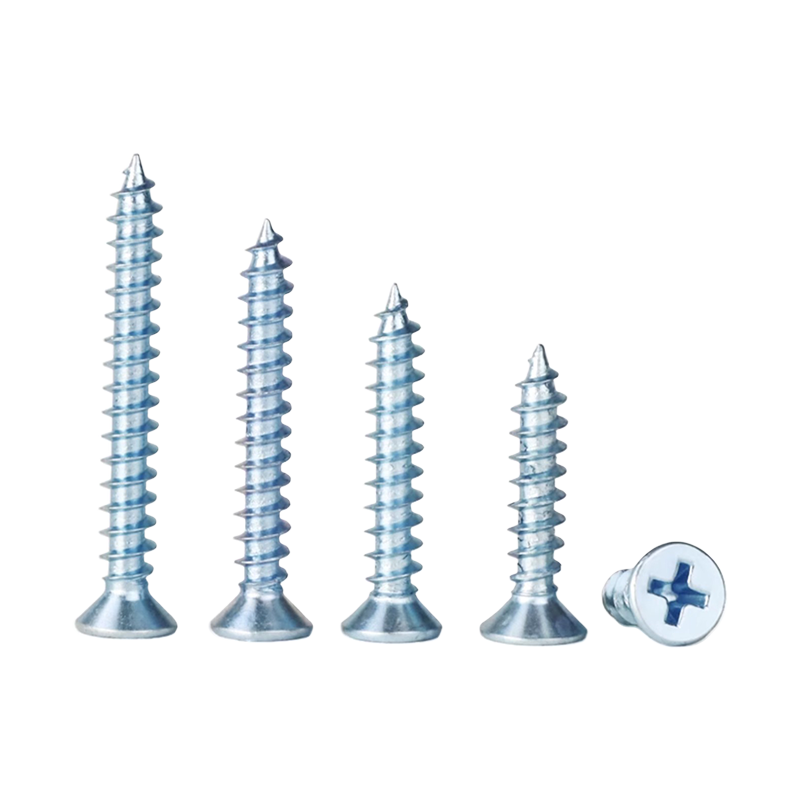
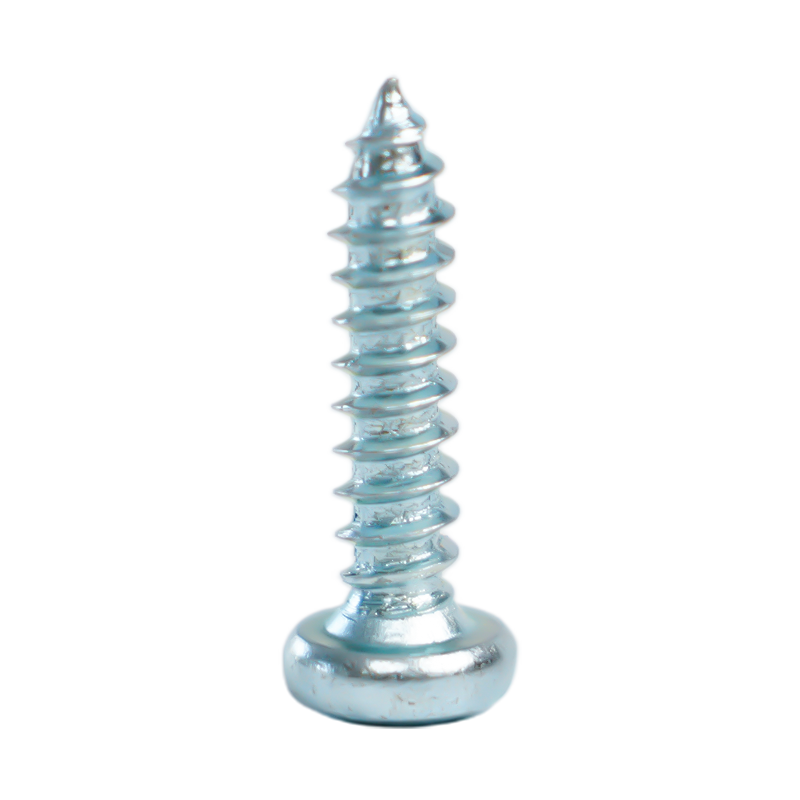
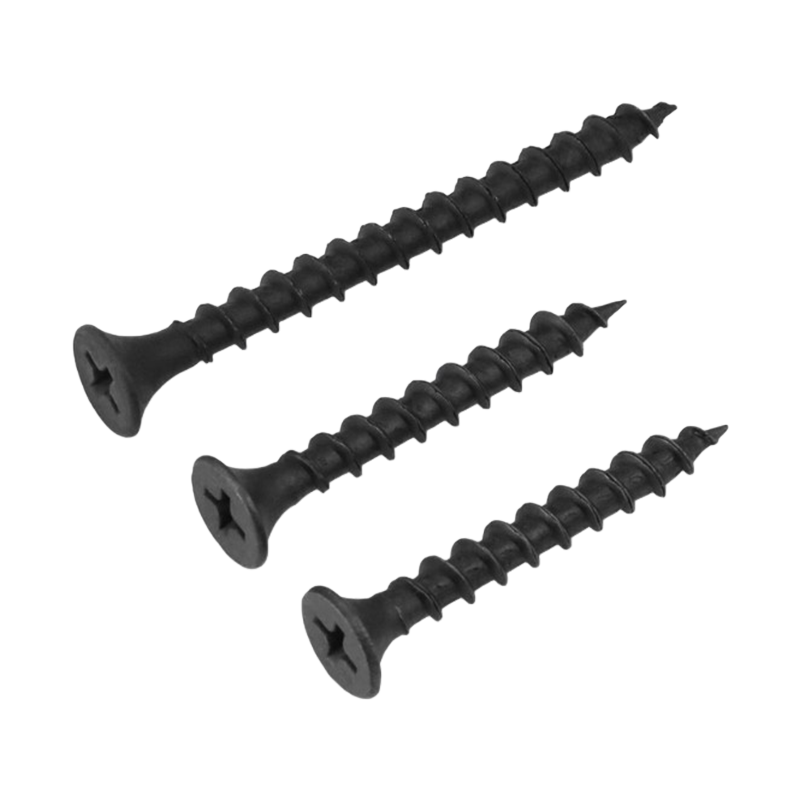
Coarse-thread drywall screws (also called W-type or wood-type screws) have widely spaced threads designed to grip wood fibers aggressively. When driven into a wood stud or joist, the coarse thread cuts into the grain and generates strong pullout resistance quickly. Coarse thread is the correct choice for all wood framing applications. The thread spacing also helps prevent the screw from walking or skipping on the surface of the wood before it bites.
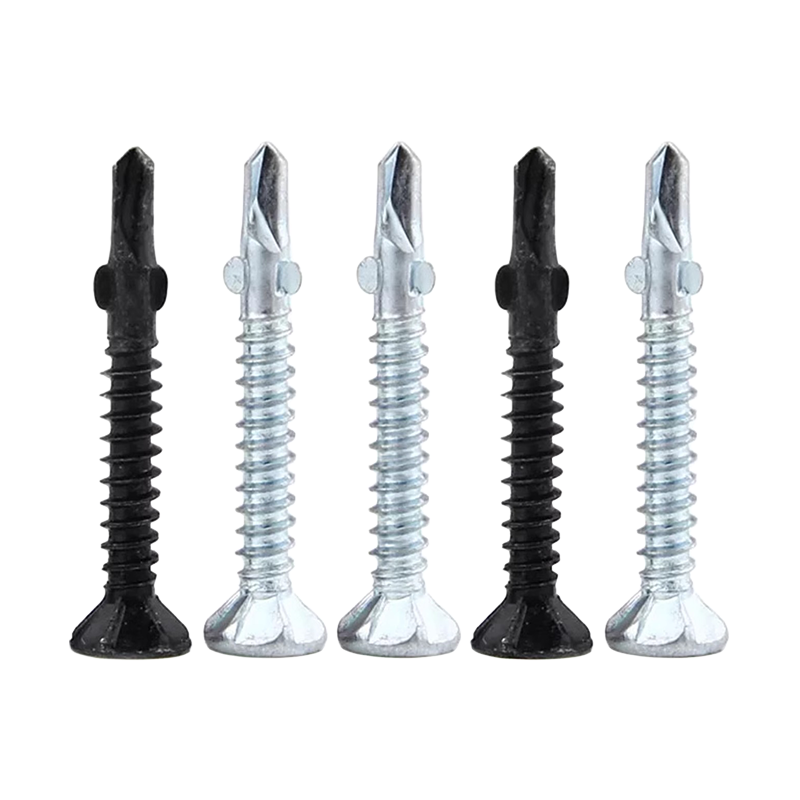
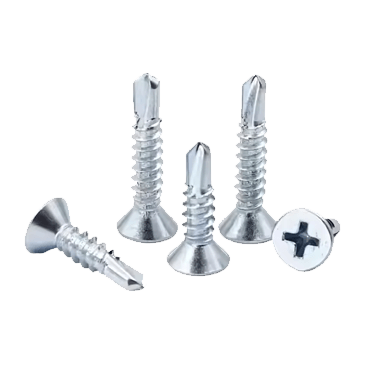
Fine-thread drywall screws (also called S-type or steel-type screws) have tightly spaced threads and a sharper point designed to pierce and thread into metal. When driven into light-gauge steel studs—the standard framing in commercial construction and basement finishing with steel track—fine thread screws bite and hold without stripping the thin metal. Using coarse-thread screws in metal framing strips the stud flange and provides virtually no holding strength.
A practical way to remember the distinction: coarse = wood, fine = metal. The thread is visible to the eye—coarse threads look noticeably more aggressive with wider spacing, while fine threads appear densely packed along the shank.
One additional thread type worth knowing is the hi-lo thread, which features alternating high and low threads. Hi-lo drywall screws are designed for attaching drywall to both wood and light steel and are popular in mixed-framing situations or when a contractor wants to stock a single screw type for an entire job.
Drywall Screw Head Size and Type
The head of a drywall screw is as functionally important as its length and thread. Standard drywall screws feature a bugle head—a concave, tapered profile that is specifically engineered for drywall installation. The bugle shape allows the screw head to countersink smoothly into the paper face of the panel without tearing the paper or breaking through it. A properly driven bugle head sits just below the panel surface, creating a shallow dimple that can be filled with joint compound.
Head diameter on a #6 drywall screw is typically around 0.315 inches (8 mm), while a #8 head measures approximately 0.355 inches (9 mm). The larger head on a #8 screw provides more bearing surface, which distributes clamping force across a wider area of the panel face—useful in thicker assemblies but unnecessary for standard 1/2-inch residential work.
The drive recess on virtually all drywall screws is a #2 Phillips. This is intentional—the Phillips drive is designed to cam out (slip) at a predictable torque threshold, which helped establish consistent depth setting before automatic screwguns with adjustable clutches became universal. Today, most professional installers use a drywall screwgun with a depth-sensitive nosepiece rather than relying on cam-out, but the #2 Phillips remains the standard across the industry.
Some specialty drywall screws use a square (Robertson) or star (Torx) drive for improved torque transfer and reduced cam-out during high-volume installation. These are more common in Canadian markets and in commercial projects where screwgun speed and bit longevity are prioritized.
How Many Drywall Screws Do You Need
Screw spacing requirements are specified by building codes and drywall manufacturer installation instructions, and they vary depending on whether the panel is on a wall or ceiling and whether the installation is single or double layer.
- Walls, single layer: Screws at 16 inches on center in the field of the panel; 8 inches on center at panel edges along framing
- Ceilings, single layer: Screws at 12 inches on center in the field; 8 inches on center at edges
- Double-layer applications: Base layer at 24 inches on center; face layer at 12 inches on center
As a practical estimate, a standard 4×8-foot panel installed on walls with 16-inch stud spacing requires approximately 28–32 screws per panel. Ceiling panels require more—typically 35–40 per panel at 12-inch field spacing. A 5-pound box of 1-5/8-inch #6 drywall screws contains roughly 400–450 screws, sufficient for approximately 12–15 standard wall panels.